
Sichuan Boiled Fish: Celebrate Lunar New Year with Spice!
Last Updated on May 8, 2026 by aitanarecipez
As the Lunar New Year approaches, our kitchens fill with the vibrant colors and enticing aromas of traditional dishes none more thrilling than the fiery Sichuan Boiled Fish. I discovered this gem during a festive family gathering, where the anticipation of spicy flavors kept everyone on the edge of their seats. It’s a dish that combines the soft, flaky texture of fresh fish with an intense and numbing spice that characterizes Sichuan cuisine.
What makes this recipe so special? Not only can it be whipped up in under 30 minutes, but it also delivers a culinary experience that feels both adventurous and comforting. The sizzling garlic and ginger meld with chili oil and fragrant Sichuan peppercorns, creating a sauce that dances with flavor. Each bite transports you to a bustling street market, where bold tastes reign supreme.
So gather your ingredients, and let s embark on a simple yet exhilarating journey that s sure to impress your friends and family this season!
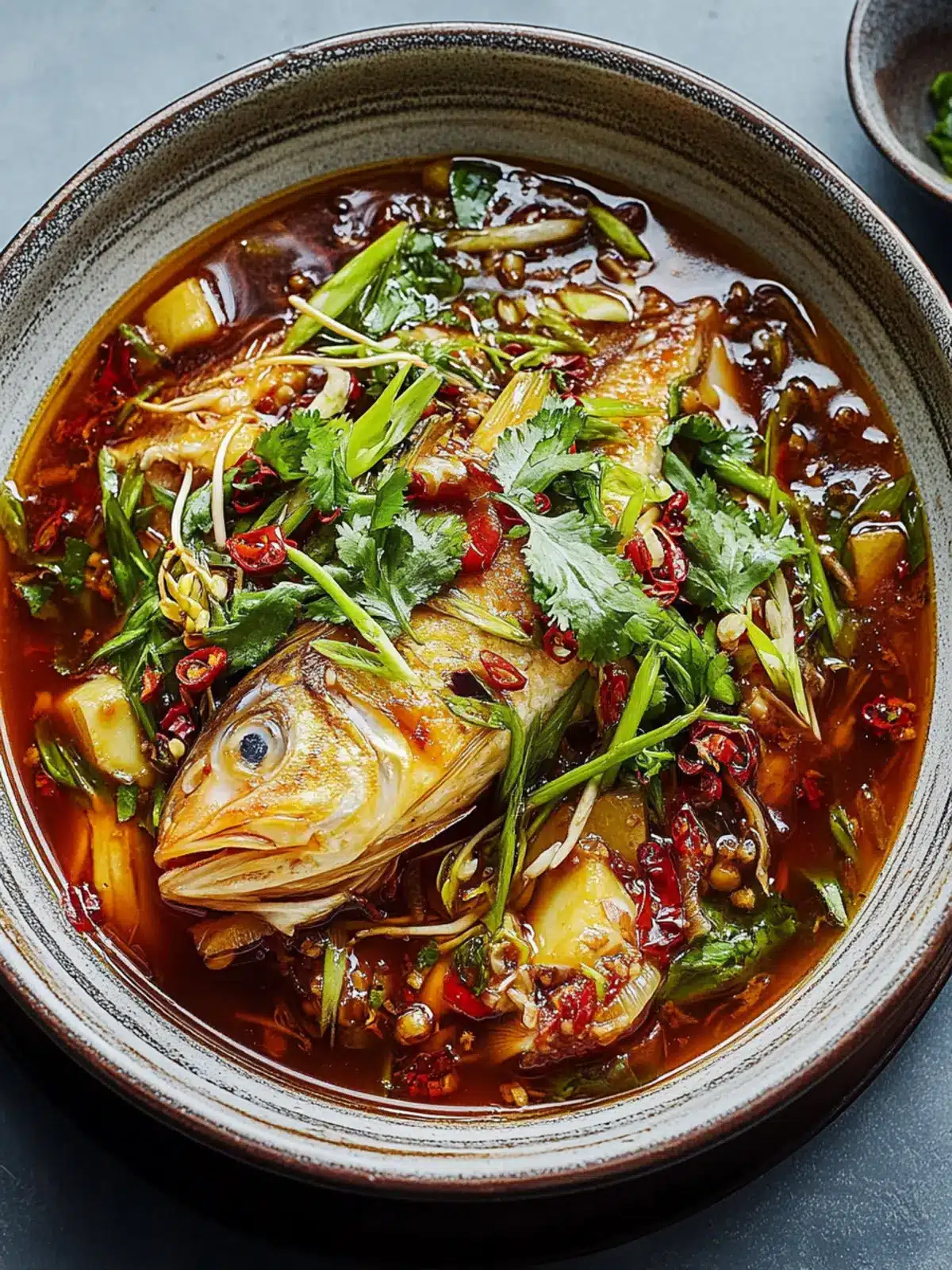
Why is Sichuan Boiled Fish a must-try?
Quick preparation: This dish can be made in under 30 minutes, making it perfect for a festive feast or a weeknight dinner.
Flavor explosion: The combination of Sichuan peppercorns and chili oil creates a numbing, spicy sensation that is unlike anything else, keeping your taste buds excited.
Cultural significance: Enjoying this dish during Lunar New Year reflects your appreciation for the rich traditions of Sichuan cuisine, bringing warmth and joy to your celebrations.
Customizable: Feel free to substitute your favorite fish or add extra vegetables to incorporate personal touches, ensuring everyone at the table will savor it.
Crowd-pleaser: The incredible aroma and vibrant colors make this dish a head-turner, sure to impress your guests and spark conversation.
Let s get cooking and embrace the festivities with a spicy twist!
Sichuan Boiled Fish Ingredients
For the Fish
Fish (tilapia or catfish) Fresh fish is essential for the best flavor and texture.
Cornstarch Coating the fish adds a slight crunch and helps thicken the sauce.
For the Sauce
Sichuan Peppercorns Provides that unique numbing spice characteristic of Sichuan cuisine.
Chili Oil Adds rich heat and flavor; homemade options can elevate your dish.
Garlic Freshly minced garlic gives an aromatic punch that’s hard to resist.
Ginger Fresh ginger enhances warmth and complexity in the sauce.
Soy Sauce Infuses umami richness; low-sodium varieties can be used for a healthier option.
For the Vegetables
Vegetables (bok choy, bean sprouts) Quick-cooking greens add freshness and crunch; feel free to swap based on preference.
The vibrant flavors and enticing aroma of Sichuan Boiled Fish will surely make your Lunar New Year celebrations memorable!
How to Make Sichuan Boiled Fish
Prep Ingredients: Begin by gathering all your ingredients; slice the fish into manageable pieces, mince the garlic and ginger, and wash the vegetables thoroughly. This will set you up for smooth cooking!
Marinate Fish: Coat the fish pieces in cornstarch, ensuring an even layer, and season lightly with salt. Let them sit for about 10 minutes to absorb the flavors and prepare for cooking.
Cook Aromatics: In a wok, heat a generous amount of oil over medium heat. Sauté the minced garlic and ginger until they become fragrant and golden, filling your kitchen with an irresistible aroma.
Create Sauce: Add the Sichuan peppercorns and chili oil to the wok, stirring briefly for about 30 seconds to release the essential oils and create a flavorful base.
Cook Fish: Gently add the marinated fish to the wok. Poach them carefully for about 5-7 minutes or until they turn opaque and are cooked through.
Add Vegetables: Toss in your selected greens just before serving, letting them wilt for a minute as the fish finishes cooking, adding freshness and color to the dish.
Serve Hot: Carefully transfer the cooked fish and sauce to a serving dish, drizzling over any remaining sauce, and garnish as desired with green onions or sesame seeds.
Optional: Serve with a side of steamed rice or noodles to soak up the delicious sauce.
Exact quantities are listed in the recipe card below.
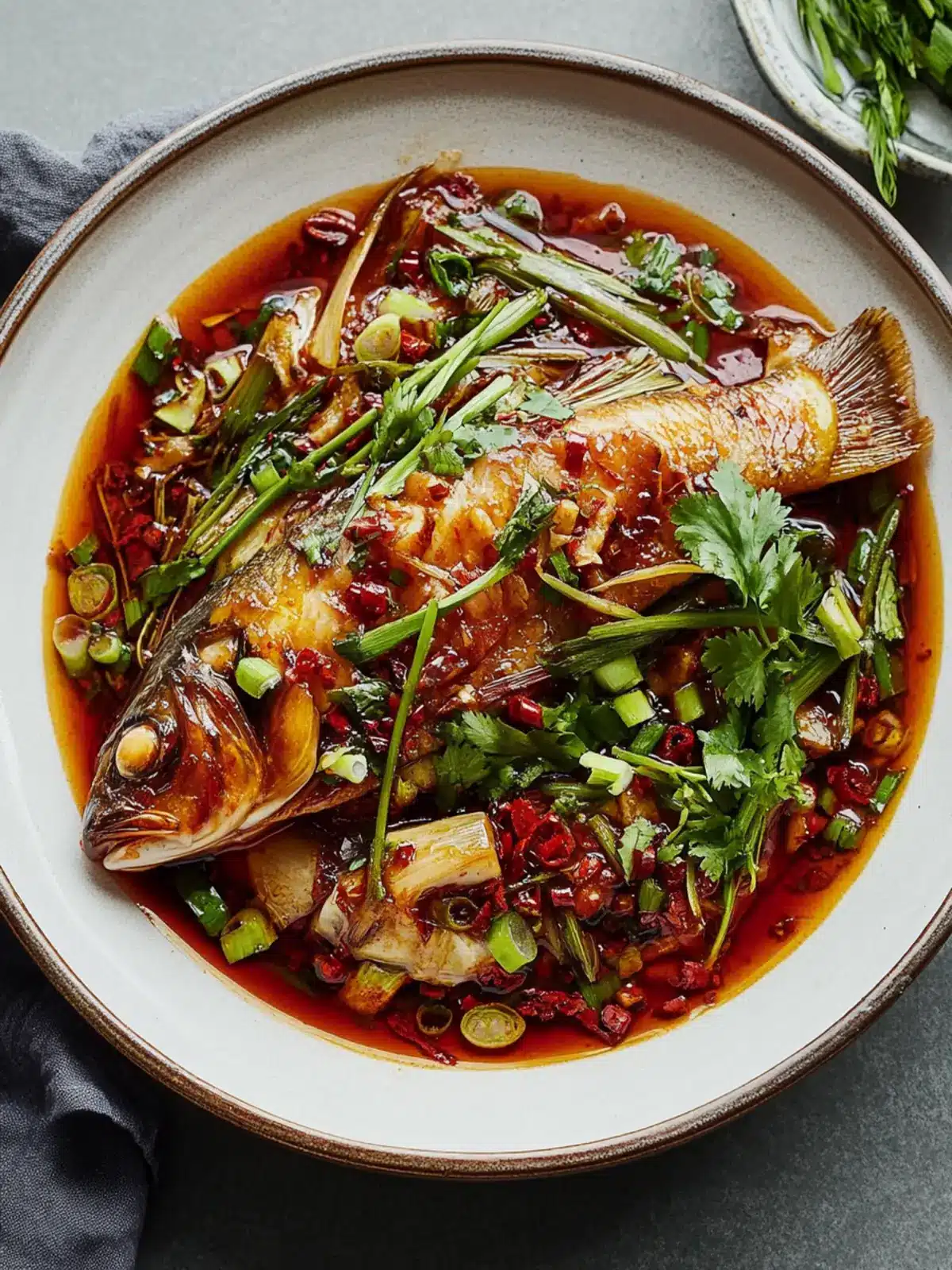
Sichuan Boiled Fish Variations
Get ready to spice up this dish with some incredible twists that will make every meal a new experience.
Different Fish: Use salmon or cod for a richer flavor profile. Both options infuse their unique characteristics into the dish.
Vegetarian Delight: Substitute fish with tofu for a plant-based alternative that still absorbs the bold sauce beautifully.
Extra Crunch: Add fried onions or peanuts as a finishing touch for a delightful textural contrast that pairs perfectly with the soft fish.
Herb Boost: Throw in fresh cilantro or green onions just before serving for a bright, herbal kick that lightens the dish.
Heat Variation: Experiment with various chili oils or fresh chilies if you want to dial up the spice. Each choice offers a different layer of heat.
Flavor Mixer: Incorporate a splash of rice vinegar into the sauce for a tangy edge that beautifully balances the rich and fiery components.
Saucy Twist: Add a tablespoon of miso to the sauce for a creamy, umami-packed variation that takes this dish to a whole new level of savoriness.
Noodle Nest: Serve atop a bed of noodles instead of veggies for a heartier meal that soaks up all the delicious sauce.
Embrace the opportunity to create a Sichuan adventure tailored to your taste buds!
How to Store and Freeze Sichuan Boiled Fish
Fridge: Store leftover Sichuan Boiled Fish in an airtight container for up to 2 days. Reheat gently in a pan to maintain the fish’s tender texture.
Freezer: If you want to freeze the dish, portion it into freezer-safe containers, and consume within 1 month for the best quality. Thaw in the fridge before reheating.
Reheating: For optimal flavor, reheat in a microwave or on the stovetop with a splash of water to keep the fish moist. Avoid boiling to preserve its delicate texture.
Make Ahead Options
These Sichuan Boiled Fish are perfect for busy home cooks looking to save time during meal prep! You can marinate the fish and coat it in cornstarch up to 24 hours in advance, allowing it to absorb the flavors while staying fresh. Additionally, you can chop and wash your vegetables ahead of time and store them in airtight containers in the refrigerator for up to 3 days. When you’re ready to serve, simply heat your wok, sauté the garlic and ginger, create the sauce, and then gently poach the marinated fish before tossing in your prepped greens. This way, you’ll have a restaurant-quality dish with minimal effort, making dinner hassle-free and delicious!
Expert Tips for Sichuan Boiled Fish
- Fresh Fish: Use the freshest fish possible to maximize flavor and texture; avoid frozen if you can as it tends to lose quality.
- Watch the Oil: Ensure the oil is hot before adding the fish to prevent sticking and create a nice sear; test it with a drop of water first.
- Ingredient Prep: Gather and prepare all ingredients before cooking, as the process is quick and you ll want everything within reach.
- Avoid Overcooking: Monitor the fish closely to prevent it from overcooking; it should flake gently and remain tender.
- Customize Spice Level: Adjust the amount of chili oil based on your spice preference; start with less if you’re unsure and add more as needed.
What to Serve with Sichuan Boiled Fish?
Creating a memorable meal is all about balance, and accompanying your fiery dish with the right sides can enhance the overall experience.
Steamed Jasmine Rice: Soft and fragrant, this rice will soak up the spicy sauce and cool down the heat, creating a harmonious bite.
Garlic Broccoli: This vibrant green side adds a crunchy freshness that complements the rich flavors of the fish while bringing a touch of color to your plate.
Cold Cucumber Salad: A refreshing salad tossed in sesame oil balances the heat of the Sichuan spices with its crispness and vibrant flavor, making it a delightful contrast.
Egg Noodles: Serve with chewy egg noodles that are perfect for slurping up the sauce. This pairing enhances the dish’s satisfaction while adding heartiness.
Chili Oil Dumplings: For those seeking more spice, delicate dumplings drizzled with more chili oil provide a unique texture and richness, creating a spicy culinary adventure. They can also serve as excellent appetizers.
Sweet Coconut Tapioca: End the meal on a soothing note with this dessert. Its sweet and creamy nature offsets the spice, allowing for a delightful conclusion to your dining experience.
With these pairings, your Sichuan Boiled Fish will shine at the center of a vibrant and satisfying feast!
Sichuan Boiled Fish Recipe FAQs
How do I select the best fish for this recipe?
Absolutely! When choosing fish, look for fillets that are firm to the touch and have a fresh, mild smell. The flesh should be shiny and translucent, without any dark spots or blemishes. Tilapia and catfish are wonderful choices for their ability to absorb the spicy flavors of the Sichuan sauce, but any fresh white fish will work beautifully.
What is the best way to store leftovers?
Very! To store your Sichuan Boiled Fish, place the leftovers in an airtight container and keep them in the refrigerator for up to 2 days. When reheating, do so carefully in a skillet over low heat to maintain tenderness. Just add a dash of water to help with moisture, and keep an eye on the fish to prevent overcooking.
Can I freeze Sichuan Boiled Fish?
Absolutely! If you want to freeze your dish, divide it into portions and place them in freezer-safe containers. It s best consumed within 1 month to ensure optimal quality. When you re ready to enjoy it again, thaw it overnight in the refrigerator and then reheat gently on the stovetop, adding a little water to keep it moist.
What should I do if my fish is overcooked?
Don t worry, it happens to the best of us! If your fish turns out overcooked and too flaky, try serving it on a bed of freshly steamed rice or mix it with stir-fried vegetables for added moisture and flavor. Additionally, you can prepare a little extra sauce to drizzle on top, which will help liven up the dish.
Can I adjust the spice level for this dish?
Very! You can definitely tailor this recipe to suit your spice preference. For a milder experience, reduce the amount of chili oil used or opt for sweet paprika instead of Sichuan peppercorns. You can start with less spice and gradually add more to taste as you go, ensuring it suits everyone s palate at your table.
Are there any dietary considerations for this recipe?
Absolutely! This dish is generally suitable for many diets but be cautious if you or your guests have seafood allergies. Additionally, for a gluten-free option, you can use gluten-free soy sauce or tamari instead. If you’re concerned about the spice level for children or sensitive palates, consider omitting the Sichuan peppercorns and using milder seasonings instead.