
Cacio e Pepe Bliss: Creamy Italian Comfort in Minutes
Last Updated on May 8, 2026 by aitanarecipez
When the craving for something rich and comforting strikes, there’s nothing quite like whipping up a bowl of Cacio e Pepe. This traditional Roman dish showcases just a handful of ingredients, transforming everyday pantry staples into a culinary masterpiece. The moment I toss freshly cooked tonnarelli in a creamy blend of Pecorino Romano and Grana Padano, I m transported to bustling trattorias in Rome, where the aroma of cheese and black pepper fills the air.
What s truly remarkable about Cacio e Pepe is its elegant simplicity perfect for those busy weeknight dinners when you want to savor the comforts of home-cooked food without spending hours in the kitchen. With just a pot, a pan, and a little bit of love, you ll create a dish that not only warms the belly but also warms the heart. Whether you’re new to cooking or a seasoned chef, this easy yet impressive pasta will soon become a favorite in your culinary repertoire. Let s dive into this delightful recipe that promises to elevate your dining experience!
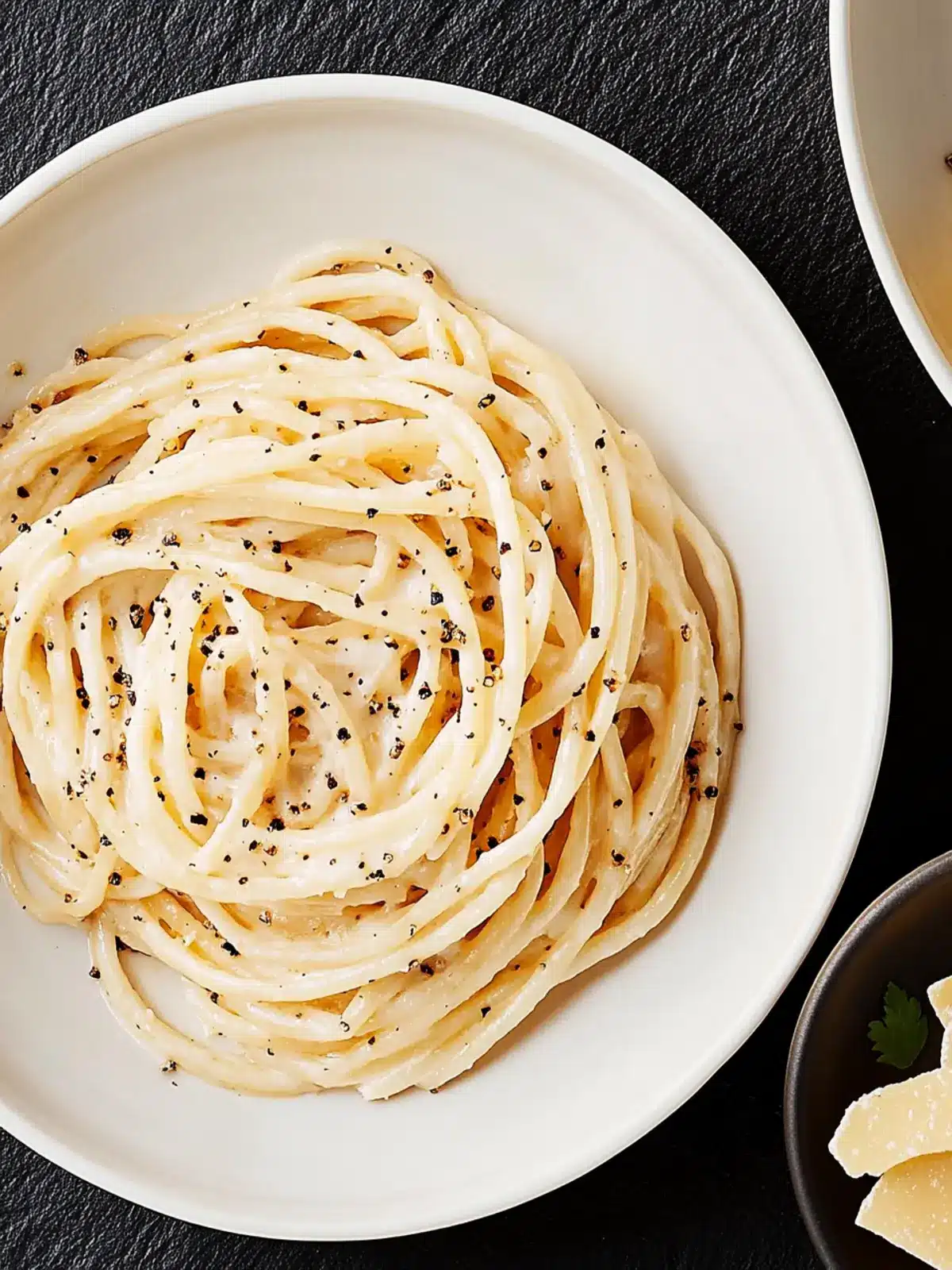
Why is Cacio e Pepe the Ultimate Comfort Food?
Simplicity at Its Finest: With just a few quality ingredients, you can whip up this classic Italian dish in no time.
Decadent Creaminess: The creamy blend of Pecorino Romano and Grana Padano envelops each pasta strand, offering rich flavor with every bite.
Quick and Effortless: Perfect for busy weeknights, Cacio e Pepe can be on your table in under 20 minutes, making it an ideal dinner choice for anyone.
Crowd-Pleaser: This dish is not just for pasta lovers; its universal appeal makes it a hit at dinner parties and family gatherings alike.
Flexible Variations: Don t hesitate to experiment with different pasta shapes or cheese substitutions to suit your taste!
Cacio e Pepe Ingredients
For the Pasta
Tonnarelli The traditional pasta choice, but feel free to use spaghetti or bucatini for a twist.
For the Cheese
Pecorino Romano Cheese Essential for its sharp flavor; freshly grated is best for melting.
Grana Padano Cheese Adds creaminess that balances Pecorino; you can use Parmesan as a substitute.
For the Flavor
Freshly Cracked Black Pepper A must for that signature kick; always crack it fresh for the best aroma.
For the Sauce
Butter Provides richness to the dish; olive oil can be used for a lighter version.
Pasta Water Vital for achieving the creamy consistency; don t forget to reserve some before draining.
How to Make Cacio e Pepe
Cook the Pasta: Bring a large pot of salted water to a boil and cook the tonnarelli according to the package instructions until al dente. Be sure to reserve a cup of the pasta water before draining.
Sauté the Pepper: In a large skillet over medium heat, melt the butter. Add the freshly cracked black pepper and sauté for about 30 seconds until it s fragrant and aromatic, releasing its lovely oils.
Toss the Pasta: Add the drained pasta to the skillet, tossing it with the butter and pepper mixture. Ensure the pasta is well coated, and allow it to absorb the flavors for a minute.
Add the Cheeses: Gradually sprinkle in the grated Pecorino Romano and Grana Padano while stirring constantly with tongs. This will help create that legendary creamy sauce.
Adjust the Consistency: Slowly mix in reserved pasta water a little at a time, continuing to stir until you reach your desired creamy consistency; it should glisten on the pasta strands without being too watery.
Serve and Enjoy: Immediately plate your Cacio e Pepe, garnishing with additional cheese and a dash of freshly cracked pepper if desired. Serve it hot for the best experience!
Optional: For a touch of freshness, serve with a light salad or crusty bread.
Exact quantities are listed in the recipe card below.
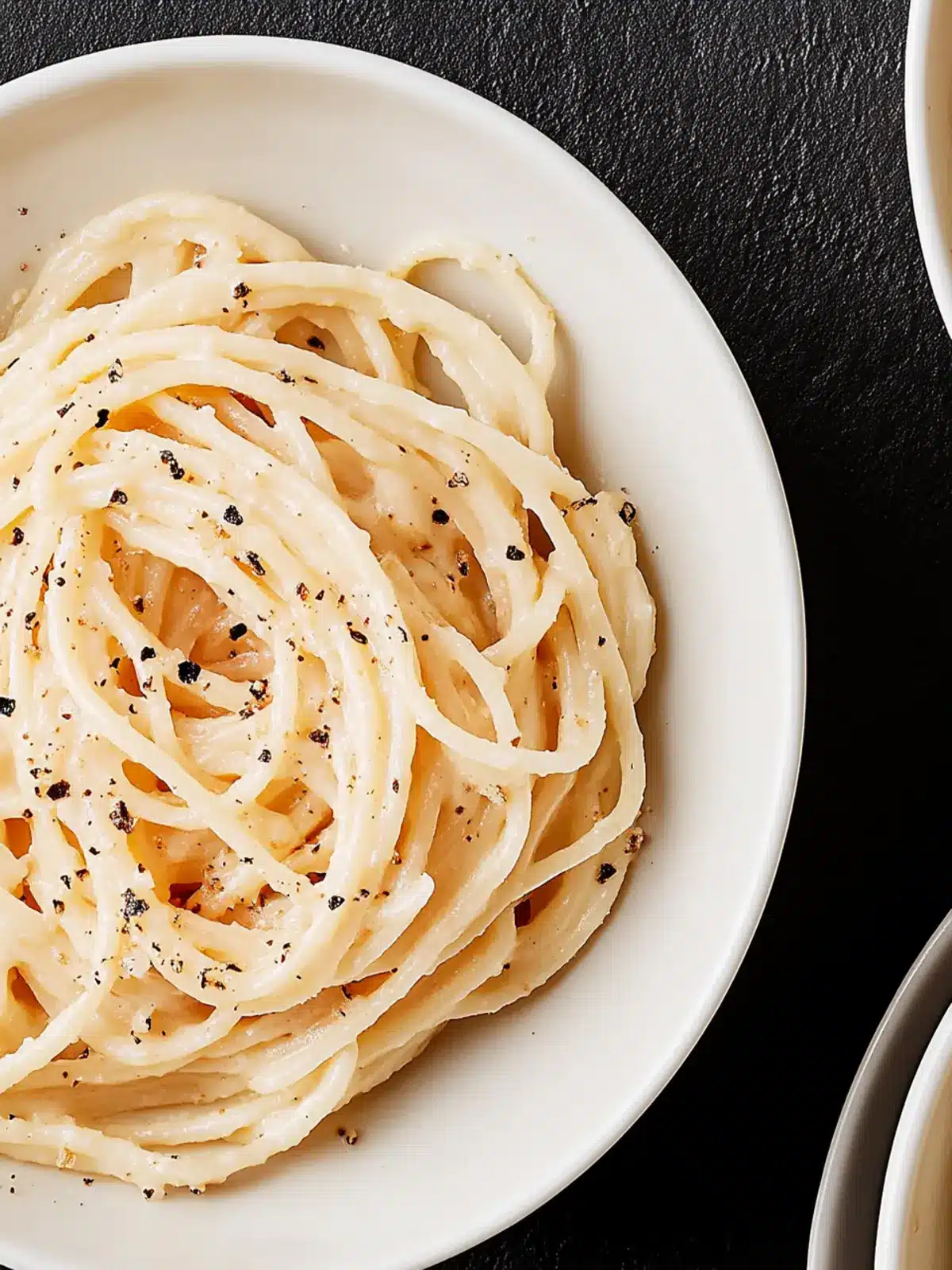
Make Ahead Options
Cacio e Pepe is an excellent choice for meal prep lovers! You can cook the tonnarelli and let it cool, then store it in an airtight container in the refrigerator for up to 3 days. For the sauce, you can pre-grate the Pecorino Romano and Grana Padano cheeses (to prevent clumping, store them in separate containers). When ready to serve, simply reheat the pasta gently in a pan with a splash of reserved pasta water, then toss in the sautéed pepper and butter mixture, followed by the cheeses. This way, you ll achieve that creamy, comforting texture without stress just as delicious as when freshly made!
How to Store and Freeze Cacio e Pepe
Fridge: Store leftover Cacio e Pepe in an airtight container for up to 2 days. Be sure to cover it well to prevent the pasta from drying out.
Freezer: While not ideal, you can freeze Cacio e Pepe for up to 1 month. Portion it in freezer-safe containers, leaving some space for expansion.
Reheating: When ready, thaw overnight in the fridge and reheat gently on the stovetop, adding a splash of reserved pasta water to restore creaminess.
Note: Cacio e Pepe is best enjoyed fresh, but these storage tips will help maintain its delightful flavors!
Cacio e Pepe Variations
Feel free to explore these exciting swaps and twists to make this delightful dish your own!
Cheese Swap: Substitute Pecorino Romano with a milder cheese like Mozzarella for a softer flavor profile.
Pasta Variety: Use fusilli or farfalle instead of tonnarelli to switch up the texture and shape. Each twist and turn offers a unique sauce embrace.
Vegan Option: Replace the butter with olive oil and use a plant-based cheese for a delicious vegan alternative that still satisfies the soul.
Creamy Upgrade: Add a splash of heavy cream for an even richer sauce that’ll make your taste buds dance.
Garlic Infusion: Sauté minced garlic in the butter for an aromatic twist that’s sure to elevate the dish. The warmth of garlic adds a gentle punch, perfect for flavor lovers.
Spice It Up: Sprinkle in some red pepper flakes if you re craving a spicy kick that complements the creamy texture beautifully.
Herb Boost: Toss in some fresh parsley or basil right before serving to brighten up the dish with a hint of freshness.
Nutty Finish: For a delightful crunch, consider adding toasted pine nuts or walnuts as a topping for added texture and depth.
What to Serve with Cacio e Pepe?
Elevate your dining experience with delightful accompaniments that balance the creamy richness of this classic dish.
Arugula Salad: A fresh, peppery arugula salad provides a light contrast, enhancing each creamy bite with a zesty crunch.
Garlic Bread: Crispy garlic bread offers a fragrant crunch, perfect for soaking up any leftover sauce, making every morsel enjoyable.
Roasted Vegetables: Roasted seasonal veggies add a warm, earthy flavor that beautifully complements the sharp notes of cheese in Cacio e Pepe.
Wine Pairing: A chilled glass of Pinot Grigio or a light Chianti brings a refreshing acidity that cuts through the richness of the dish.
Bruschetta: Topped with fresh tomatoes and basil, bruschetta adds a burst of flavor and brightness, inviting a delightful contrast to the creamy pasta.
Lemon Sorbet: Finish your meal with a refreshing lemon sorbet; its lightness cleanses the palate after the indulgent pasta, making it a perfect dessert.
Expert Tips for Cacio e Pepe
Grate Your Cheese Fresh: For the best melting and flavor, always grate cheese from a whole block instead of using pre-grated cheese.
Use Freshly Cracked Pepper: This is key! Pre-ground pepper lacks the aroma and kick that freshly cracked black pepper brings to your Cacio e Pepe.
Reserve Pasta Water: Never skip this step! The starchy pasta water is crucial for achieving that silky sauce; add it gradually until you reach the perfect consistency.
Watch Your Sauce Consistency: If your sauce becomes too thick, simply stir in more reserved pasta water. It should be creamy, not gloppy.
Experiment with Cheese: If Pecorino Romano is too sharp for your taste, try mixing in a milder cheese like mozzarella or using parmesan for a different flavor profile.
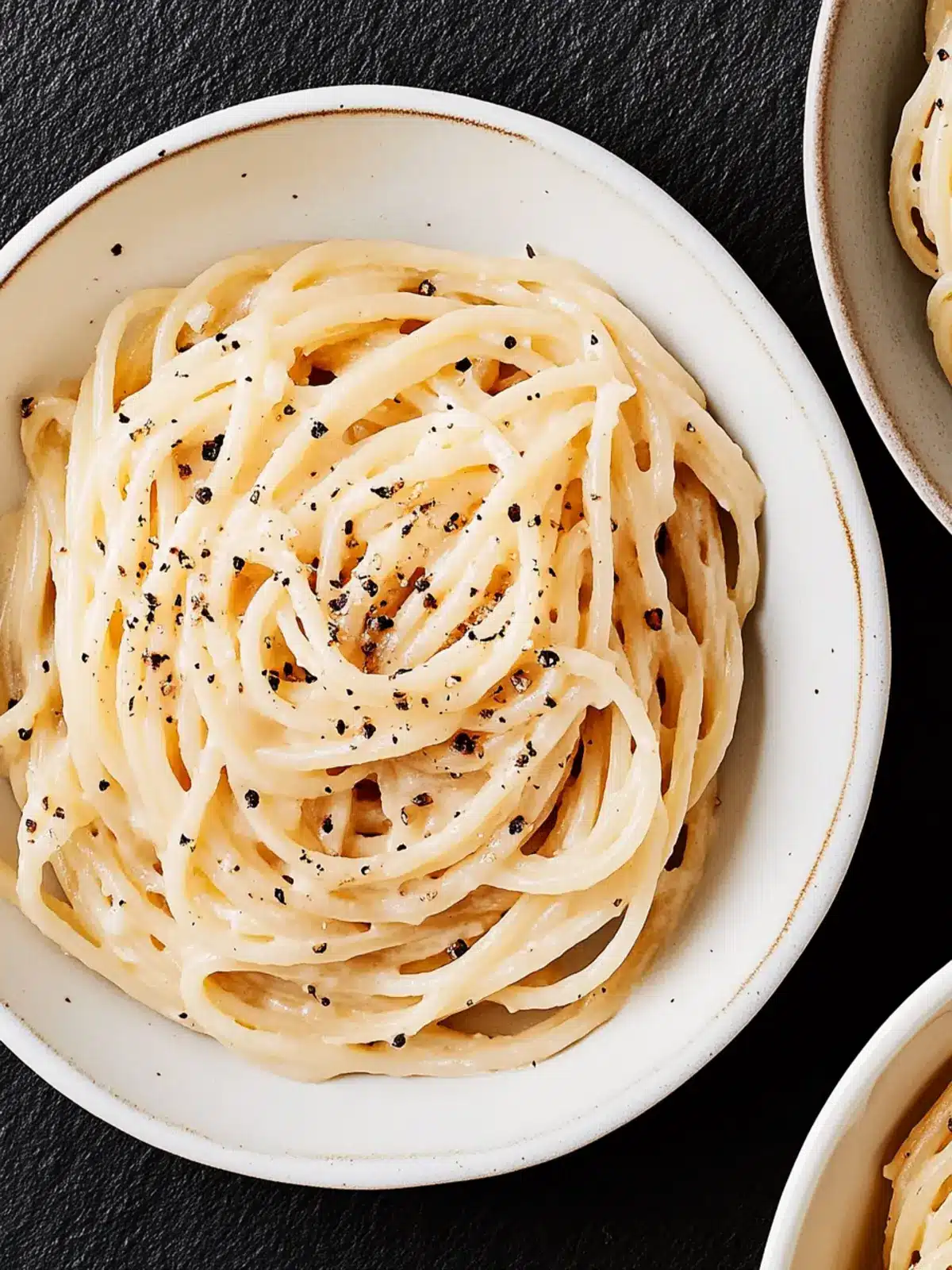
Cacio e Pepe Recipe FAQs
What kind of pasta should I use for Cacio e Pepe?
Absolutely! While traditional Cacio e Pepe is made with tonnarelli, you can also use spaghetti, bucatini, or any long pasta shape you prefer. Just ensure it s cooked al dente for the best texture!
How do I store leftovers of Cacio e Pepe?
For sure! Store any leftover Cacio e Pepe in an airtight container in the fridge for up to 2 days. Make sure to cover it well to prevent the pasta from drying out. When you’re ready to enjoy it again, gently reheat with a splash of reserved pasta water to revive its creamy consistency.
Can I freeze Cacio e Pepe?
Yes, indeed! While it’s best enjoyed fresh, you can freeze Cacio e Pepe for up to 1 month. Portion it in freezer-safe containers, leaving a little space for expansion. When you want to thaw it, do so overnight in the fridge, and reheat gently on the stovetop, adding some reserved pasta water to restore that delightful creaminess.
What if my Cacio e Pepe sauce is too thick?
No problem at all! If your sauce turns out too thick, simply add more reserved pasta water gradually, stirring continuously until you reach the desired silky consistency. Remember, the goal is to have a sauce that clings to the pasta but isn t gloppy!
Can I use different types of cheese in my Cacio e Pepe?
Very much so! If you find Pecorino Romano too sharp for your taste, feel free to experiment with milder cheeses like mozzarella or Parmesan. Just make sure to grate it fresh for the best melting quality, and mix it with Grana Padano if you want to keep that classic creaminess!