
Baked Teriyaki Salmon: Quick & Healthy Dinner Delight
Last Updated on May 8, 2026 by aitanarecipez
There’s something truly captivating about the rich, savory aroma that fills my kitchen when I prepare Baked Teriyaki Salmon. Just the thought of that sticky-sweet glaze, glistening over tender fillets, has me dreaming of warm evenings and family feasts. This dish not only celebrates the delicate flavors of salmon, but it also delivers a burst of umami that makes it sing on the palate.
After a long day, this quick weeknight meal shines as a culinary solution. In just 20 minutes, including marination, you can have a healthful dinner ready that s as visually impressive as it is delicious. Whether you re entertaining friends or simply looking to enjoy a wholesome meal at home, this Baked Teriyaki Salmon is easy to whip up and utterly satisfying. Plus, it pairs beautifully with sushi rice or a fresh vegetable stir-fry, making it versatile for any occasion. Let’s dive into this delightful recipe that will surely become a staple in your kitchen!
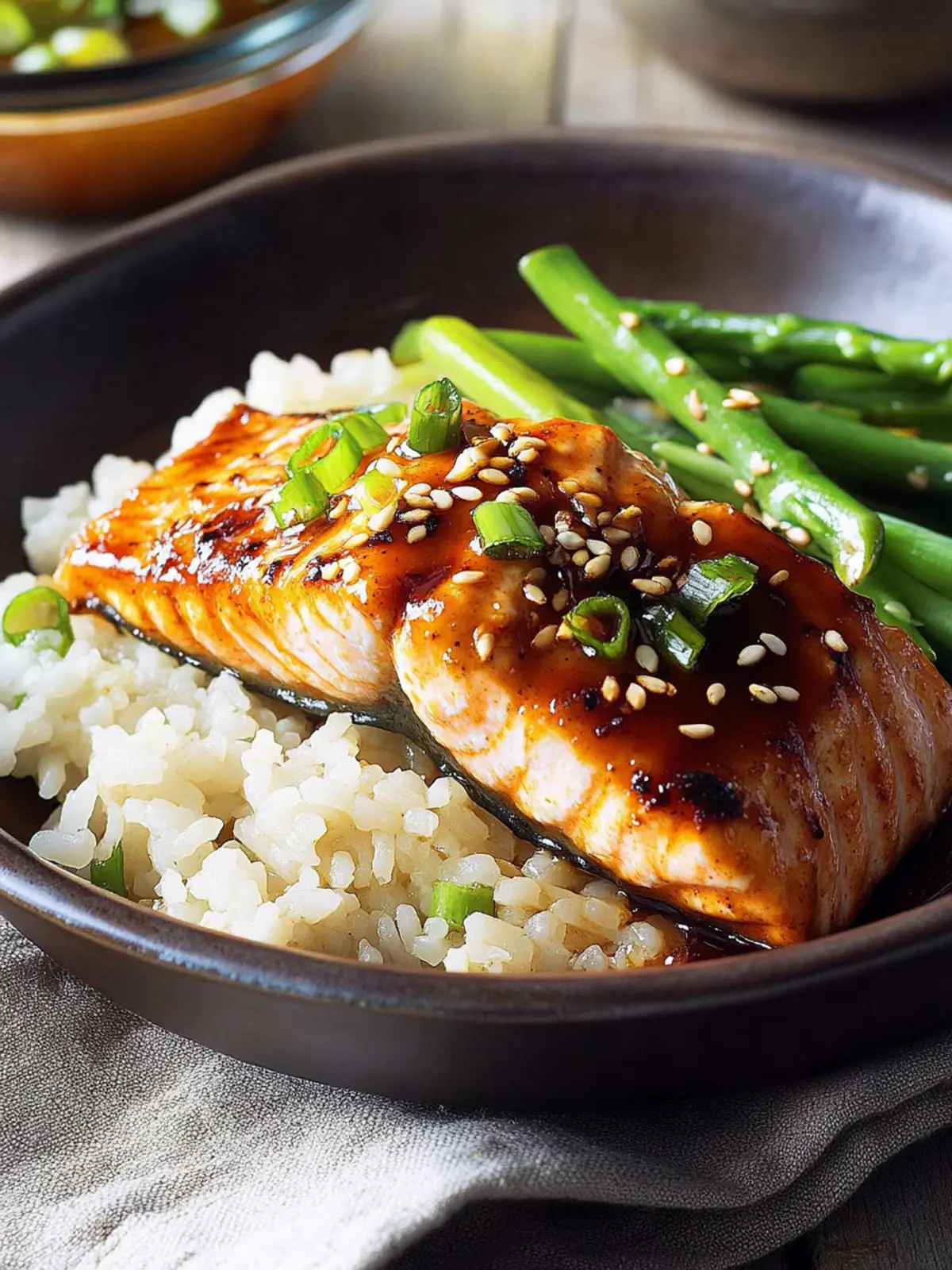
Why is Teriyaki Salmon a Must-Try Dish?
Flavor-packed delight: The Baked Teriyaki Salmon bathes in a sweet and savory glaze that tantalizes your taste buds with every bite.
Quick and easy: In just 20 minutes, you’ll have a gorgeous meal ready to impress your family or guests.
Heart-healthy option: Loaded with omega-3 fatty acids, this dish supports a balanced diet while being delicious.
Versatile sides: Pair it with sushi rice or a vibrant stir-fry for a well-rounded dinner.
Woah factor: The glossy finish conjures images of gourmet chefs, making your dinner table feel like a high-end restaurant.
Make it a weeknight favorite and savor the joy of homemade cooking!
Teriyaki Salmon Ingredients
For the Marinade
Soy Sauce Provides a savory base flavor; substitute with tamari for a gluten-free option.
Brown Sugar or Honey Adds a touch of sweetness to balance out the saltiness; use honey for a floral hint.
Garlic (3 cloves, minced) Infuses an aromatic and pungent kick; green onions can work in a pinch.
Sesame Oil (1 tablespoon) Brings in a delightful nutty flavor; vegetable oil is a lighter alternative if desired.
For the Salmon
Salmon Fillets (4 pieces, 6 ounces each) This is the star of the dish; choose sustainably sourced salmon or any sturdy firm fish.
With these simple yet essential Teriyaki Salmon ingredients, you’re on your way to a flavor-packed and satisfying meal in no time!
How to Make Baked Teriyaki Salmon
Whisk together: In a small bowl, combine soy sauce, brown sugar (or honey), minced garlic, and sesame oil. Whisk until smooth and well combined, creating that delightful marinade you’ll soak the salmon in.
Marinate the salmon: Pour 1/4 cup of this luscious marinade into a large shallow dish. Place your salmon fillets in the dish and gently turn to coat them fully. Cover and refrigerate for up to 30 minutes to let those flavors meld together.
Preheat your oven: While the salmon is marinating, preheat your oven to 400°F (200°C). This ensures your fish cooks evenly and stays tender.
Prepare for baking: After marinating, take the salmon out, discarding the used marinade. Place the salmon skin-side down on a greased baking sheet, ready for the oven.
Bake the salmon: Slide the salmon into your preheated oven and bake for 10-12 minutes. Keep an eye on it and look for that tell-tale flakiness with a fork to know it s perfectly cooked!
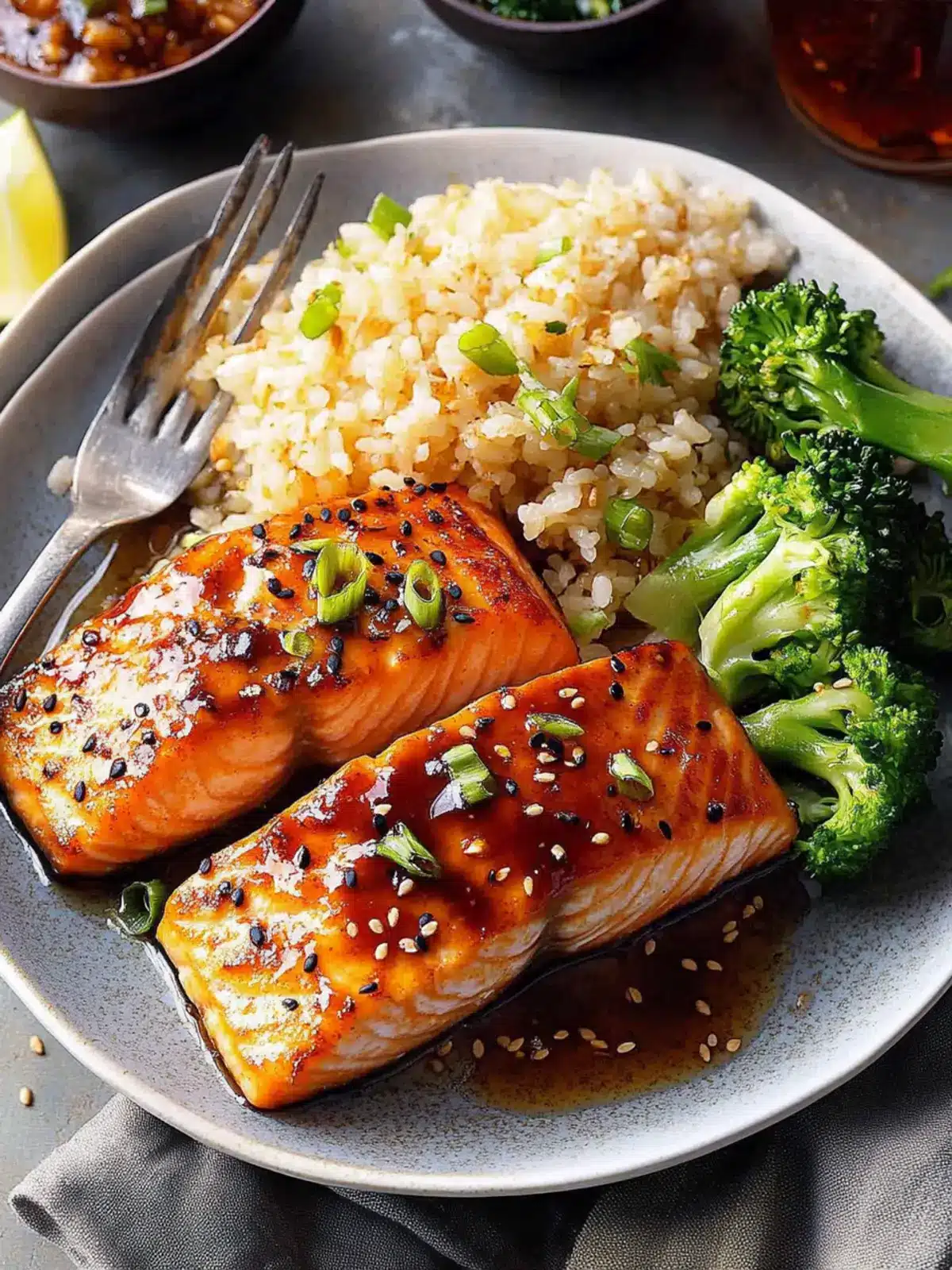
Finish with glaze: Once it’s done baking, brush the salmon with the reserved marinade for an extra touch of flavor. Garnish with sliced green onion and sesame seeds for that restaurant-quality presentation.
Optional: Serve with a sprinkle of lime juice for a refreshing zing.
Exact quantities are listed in the recipe card below.
Make Ahead Options
These Baked Teriyaki Salmon fillets are perfect for meal prep and can save you precious time during busy weeknights! You can marinate the salmon up to 24 hours in advance, allowing the flavors to deepen beautifully. Simply follow the marination steps and store the coated salmon in an airtight container in the refrigerator. Additionally, you can whisk together the marinade ingredients and keep it refrigerated for up to 3 days before using it. When you re ready to cook, just preheat your oven and bake as instructed, resulting in a mouthwatering dinner that tastes freshly made with minimal effort! This way, you can enjoy delicious homemade food without the hassle.
Expert Tips for Baked Teriyaki Salmon
- Marinate Properly: Allow the salmon to sit in the marinade for at least 15-30 minutes, maximizing flavor absorption.
- Skip the Wash: Avoid rinsing the salmon before marinating, as it increases the risk of spreading bacteria.
- Choose the Right Cut: Stick to firmer salmon cuts like top loin; salmon belly may not hold up well to baking.
- Use Fresh Ingredients: Fresh garlic and quality soy sauce make a significant difference in the taste of your teriyaki salmon.
- Experiment with Flavors: Don t hesitate to add grated ginger or citrus zest to your marinade for an exciting twist on traditional teriyaki salmon.
How to Store and Freeze Teriyaki Salmon
Fridge: Store leftover cooked Teriyaki Salmon in an airtight glass container for up to 2 days to maintain freshness and flavor.
Freezer: If you plan to freeze the salmon, wrap it tightly in plastic wrap or aluminum foil before placing it in a freezer-friendly bag. It can be stored for up to 3 months.
Reheating: To reheat, thaw frozen salmon in the fridge overnight, then warm it in a microwave or oven set to 350°F (175°C) until heated through.
Marinade Storage: If you have extra marinade, it can be stored in the fridge in a sealed container for up to 3 days but avoid freezing due to texture changes.
Teriyaki Salmon Variations
Create your own version of this delightful dish with these exciting twists!
Gluten-Free: Use tamari instead of soy sauce for a gluten-free marinade without sacrificing flavor.
Spicy Kick: Add red pepper flakes or Sriracha to the marinade for a zesty heat that will elevate your meal. A little heat goes a long way in this sweet, savory dish.
Citrus Burst: Incorporate fresh orange juice or zest into the marinade for a refreshing twist that brightens the flavors beautifully.
Vegetable Medley: Toss thinly sliced bell peppers, zucchini, or snap peas around the salmon on the baking sheet for a complete meal after baking. You’ll enjoy a colorful, flavorful complement to your entrée.
Herb-Infused: Mix in fresh herbs like cilantro or basil into the marinade just before brushing over the salmon to awaken fragrant scents and flavors.
Pineapple Delight: Toss some pineapple chunks in the marinade for a tropical flair. The sweet-tangy bite will enhance the umami depth of the teriyaki.
Baked Teriyaki Tacos: Shred the baked salmon and serve it in corn tortillas with slaw and a drizzle of sriracha mayo for a fun, fusion twist on taco night.
Roasted Vegetable Side: Roast sweet potatoes or Brussels sprouts alongside your salmon. The caramelized edges will add a delightful textural contrast, balancing the dish perfectly.
What to Serve with Baked Teriyaki Salmon?
Imagine not just serving a delightful salmon dish, but creating a complete meal that tantalizes every taste bud.
- Sushi Rice: Its sticky and slightly sweet nature complements the teriyaki flavors beautifully, providing a comforting base for the fish.
- Crispy Stir-Fried Vegetables: A medley of colorful veggies adds crunch and freshness, balancing the meal with a healthy dose of nutrients.
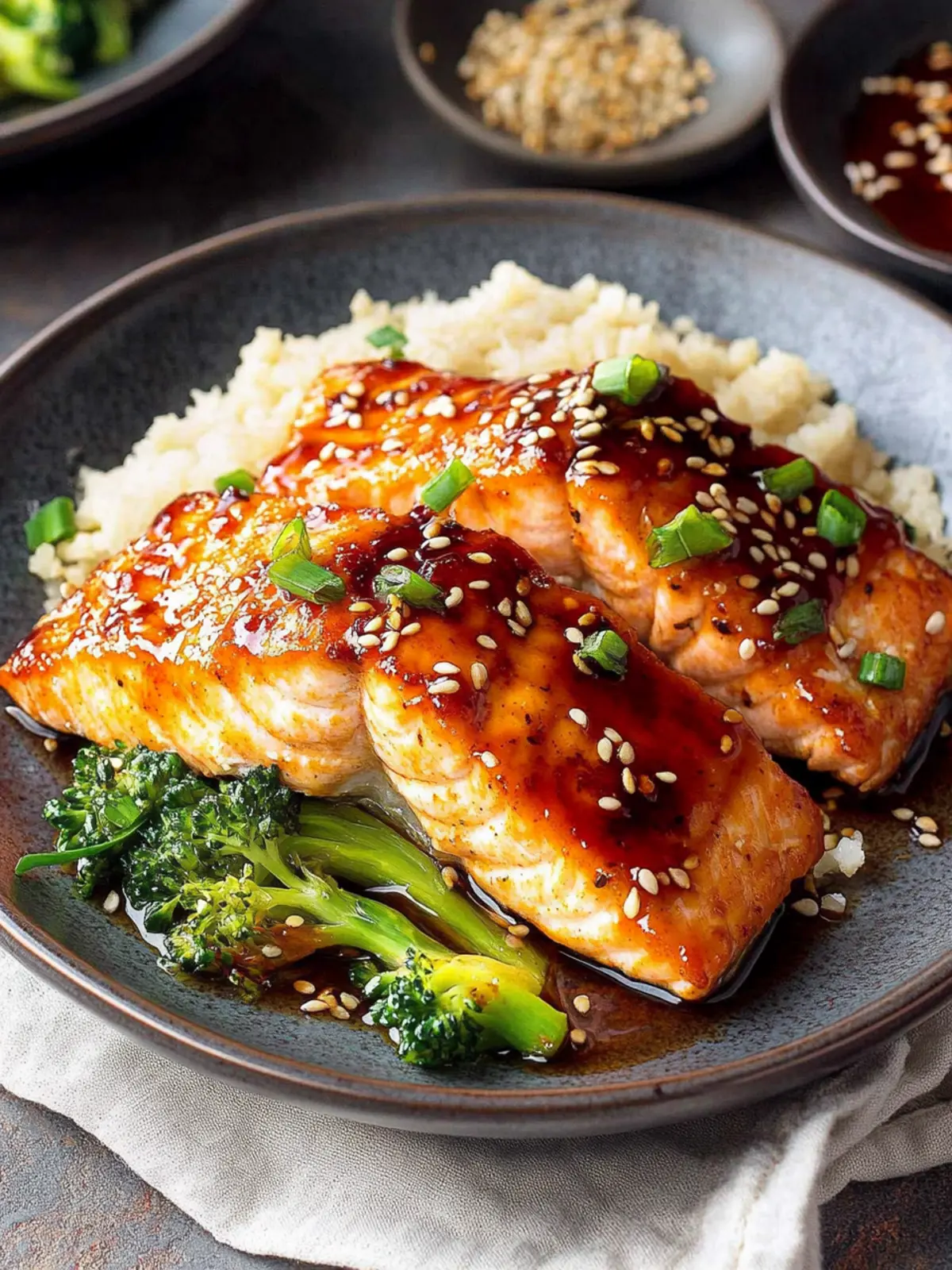
- Garlic Steamed Broccoli: Perfectly tender and vibrantly green, this simple side adds a nutritional punch while enhancing the umami in the salmon. The earthiness of broccoli harmonizes wonderfully with the sweet glaze of the fish.
- Sesame Noodles: Tossed in a light sesame sauce, these noodles are a hearty and delicious side that soak up the flavors of teriyaki, making every bite delightful.
- Mango Cucumber Salad: This fresh, zesty salad combines juicy mango with crisp cucumbers, offering a refreshing counterpoint to the rich salmon.
- Chardonnay or Riesling: A glass of chilled white wine pairs perfectly, enhancing the dish s flavors and providing a simple yet sophisticated touch.
Creating a well-rounded meal that highlights the delicious Baked Teriyaki Salmon will leave your family or guests feeling delighted and satisfied!
Baked Teriyaki Salmon Recipe FAQs
How do I choose the best salmon for my Teriyaki Salmon?
Absolutely! When selecting salmon, look for firm fillets that are bright in color with no dark spots or discoloration. The flesh should spring back when touched. I recommend choosing sustainably sourced salmon, as it not only supports the environment but also ensures you enjoy high-quality fish.
What’s the best way to store leftover Teriyaki Salmon?
Store any leftover Baked Teriyaki Salmon in an airtight glass container in the fridge for up to 2 days. This will keep it moist and flavorful. When reheating, cover the salmon to avoid drying it out, and enjoy the same delightful taste!
Can I freeze Teriyaki Salmon?
Very much! To freeze your Baked Teriyaki Salmon, tightly wrap the cooked fillets in plastic wrap or aluminum foil, then place them in a freezer bag. This can be stored for up to 3 months. When you re ready to eat, thaw it in the fridge overnight and reheat gently in the oven or microwave.
What should I do if my salmon sticks to the baking sheet?
Sometimes salmon can stick, but don’t worry! Ensure you grease your baking sheet well with cooking oil or line it with parchment paper before placing the salmon on it. If it does stick, gently use a spatula to release it, being careful not to tear the fillet.
Are there any dietary considerations I should be aware of?
If you or someone in your family has soy allergies, consider substituting soy sauce with coconut aminos for a similar savory flavor without the soy. Additionally, this recipe is heart-healthy and gluten-free if you opt for tamari instead of traditional soy sauce.
How long should I marinate the salmon for optimal flavor?
I recommend marinating the salmon for at least 15-30 minutes. The longer you marinate, the deeper the flavors will penetrate the salmon. Just be careful not to go overboard; more than 1 hour may lead to an overly salty taste.