
Korean Beef Bulgogi Rice Bowls – Easy, Flavor-Packed Delight
Last Updated on May 8, 2026 by aitanarecipez
After a long day, nothing sparks joy in the kitchen quite like the aroma of sizzling beef mingling with the sweet notes of apple and garlic. My search for quick, home-cooked meals led me to the delightful world of Korean cuisine, where the Easy Korean Beef Bulgogi Rice Bowls became my go-to dish. In just 25 minutes, I can transform humble ingredients into a flavorful feast that tantalizes the taste buds and warms the soul.
With its tender ground beef and sweet-savory marinade, this recipe not only brings a taste of Korea to my table but also offers endless possibilities for customization. Whether you choose to serve it in a bowl, wrap it in lettuce, or even toss it into tacos, the adaptability of these bowls makes them perfect for addressing any craving. Plus, with gluten-free options accessible through easy swaps, everyone can enjoy this wholesome meal.
Join me in creating this mouthwatering dish that promises both ease and flavor, ensuring your dinner plate is anything but boring!
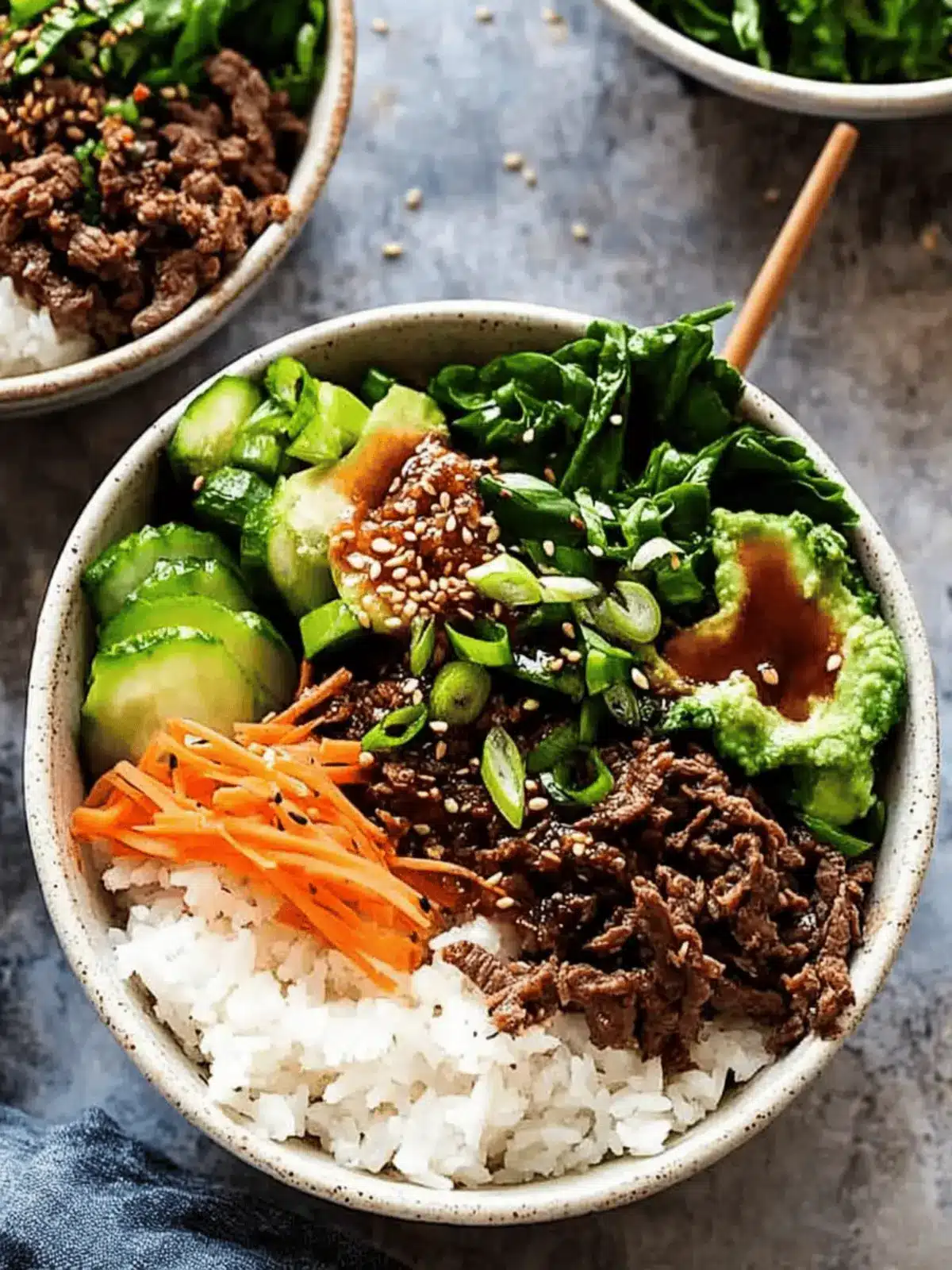
Why Are Korean Beef Bulgogi Rice Bowls Amazing?
Flavor Explosion: The Korean Beef Bulgogi Rice Bowls bring together a symphony of sweet and savory flavors that appeal to every palate.
Quick Prep Time: Ready in just 25 minutes, they fit perfectly into busy weeknights.
Versatile Options: Serve in a bowl, wrap, or taco for endless meal possibilities.
Nutritious Ingredients: Packed with tender beef, colorful veggies, and nutritious greens, this dish nourishes the body and soul.
Customizable: Easy to swap ingredients based on dietary needs gluten-free or add more crunch as you wish!
Crowd-Pleaser: Perfect for family dinners or impressing guests, these bowls are sure to be a hit at any table.
Korean Beef Bulgogi Rice Bowls Ingredients
For the Beef & Marinade
- Beef Mince The star of the dish, providing richness; any fat percentage works well.
- Canola Oil Great for cooking; prevents sticking and promotes a beautiful browning.
- Onion A flavor base; finely grated enhances depth, or substitute with shallots for a sweet touch.
- Red Apple Adds a unique sweetness and fragrance to the marinade; any sweet variety can be used.
- Garlic Essential for aromatic flavor; finely grated is best for maximizing flavor.
- Ginger Provides warmth and complexity; fresh ginger offers a more potent taste.
- Soy Sauce Enhances umami in these Korean Beef Bulgogi Rice Bowls; opt for light soy or tamari if gluten-free.
- Sesame Oil Adds depth of flavor; use toasted variety for a more pronounced taste.
- Mirin (optional) Adds sweetness; can be skipped without losing flavor.
- Brown Sugar Balances sweetness for caramelization; maple syrup is a great substitute.
- Black Pepper Adds a hint of seasoning; white pepper works for a milder note.
For the Rice & Toppings
- White Rice Tasty base; medium or short-grain works well for the stickiness. For a low-carb option, use cauliflower rice.
- Baby Spinach Adds nutrition and vibrant color; kale can be a good substitute.
- Carrot Provides crunch and color; julienned makes it visually appealing, or substitute with bell peppers.
- Avocado Adds creaminess to the dish; can be replaced with sour cream for a different twist.
- Pickled Ginger Brightens the dish and adds a tangy flavor; any pickled veggies can be substituted as well.
- Baby Cos/Romaine Lettuce Enhances freshness; other salad greens can also be used.
- White Sesame Seeds Garnish for a delightful crunch; try using toasted nuts for added texture.
- Green Onion Fresh garnish that elevates the dish’s brightness; scallions work as an alternative.
With all these delightful ingredients, you’re just steps away from a quick and satisfying meal that your family will adore!
How to Make Korean Beef Bulgogi Rice Bowls
Prepare Sauces: In separate bowls, mix the Bulgogi sauce and drizzle sauce. This quick step sets the flavor profile of your dish and ensures everything is ready when you need it.
Wilt Spinach: Heat 2 tsp of canola oil in a non-stick pan over medium heat. Toss half the spinach until semi-wilted, about 30 seconds, then add the remaining spinach until fully wilted (about 1 minute). Remove and set aside.
Cook Beef: In the same pan, add 1 tbsp of canola oil and cook the beef mince on high heat. Break it apart until no pink remains, ensuring your beef gets nice and browned.
Add Sauce: Pour the Bulgogi sauce over the browned beef, stirring continuously. Let it simmer until mostly evaporated to allow for caramelization, which should take about 2-3 minutes.
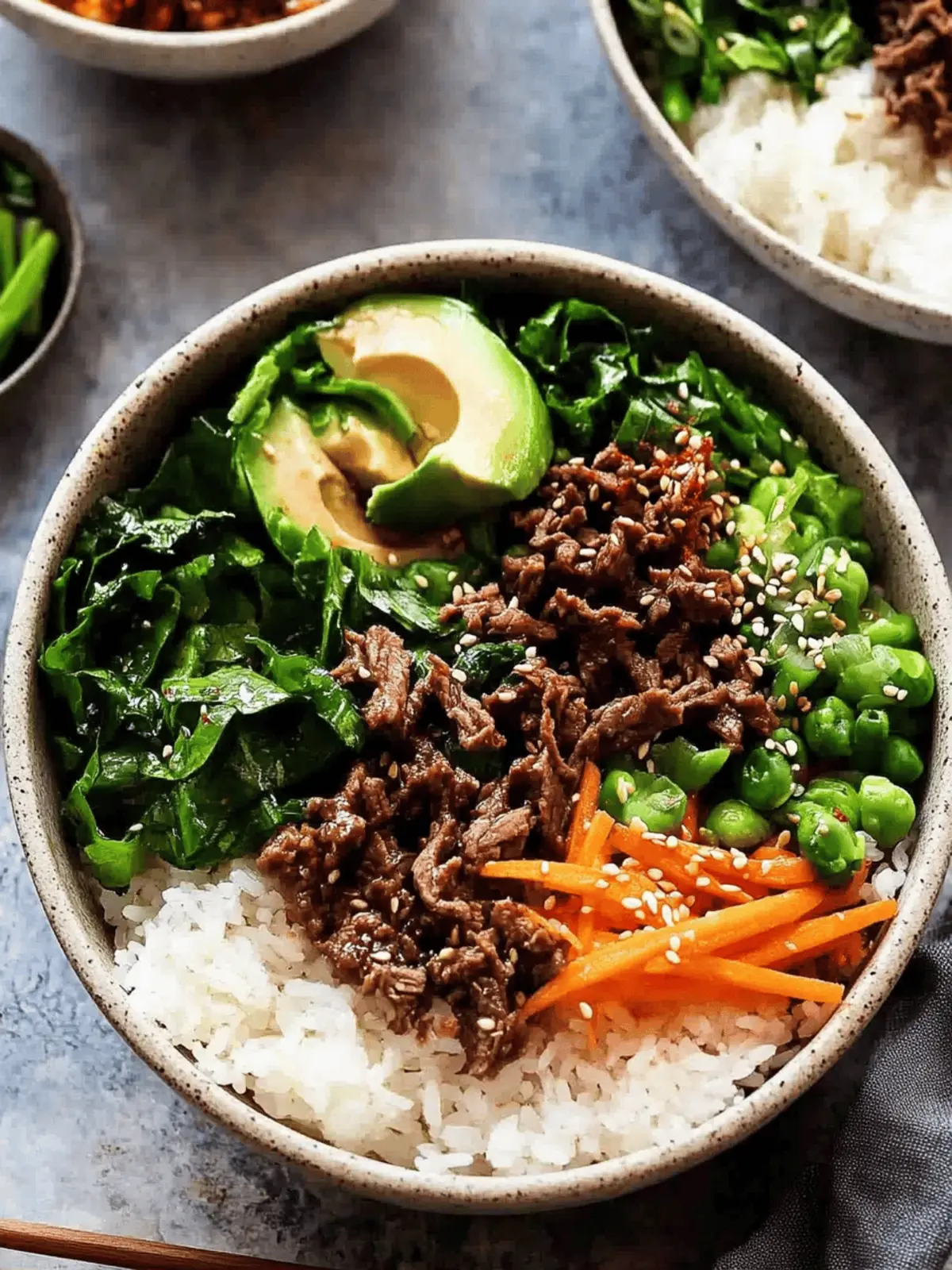
Assemble Bowls: Serve the cooked beef over a bed of white rice. Top with wilted spinach, shredded carrots, slices of avocado, and pickled ginger. Garnish with lettuce, sprinkle white sesame seeds, and green onions. Serve the drizzle sauce on the side for extra flavor!
Optional: Add some crushed peanuts for a delightful crunch!
Exact quantities are listed in the recipe card below.
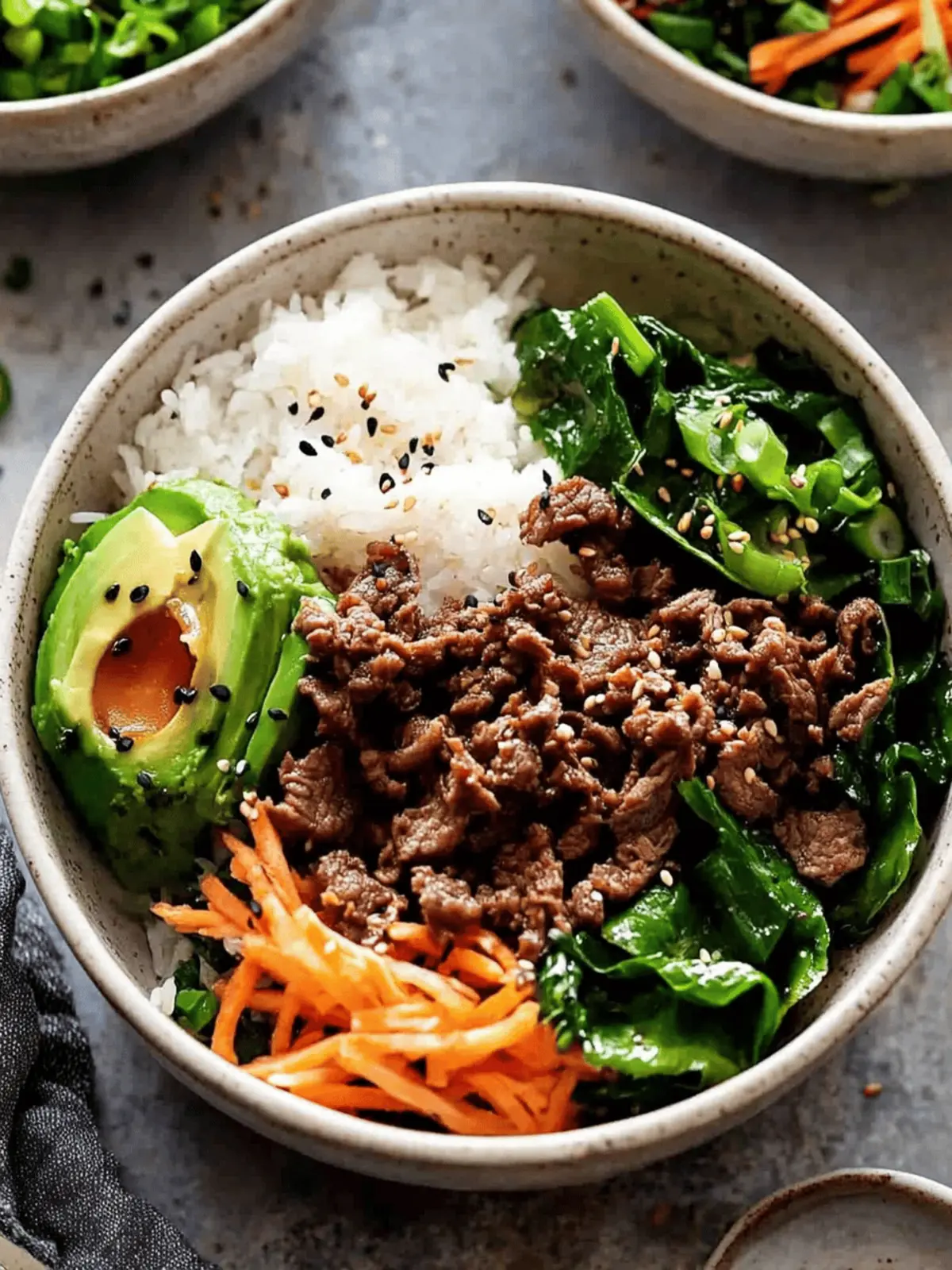
Korean Beef Bulgogi Rice Bowl Variations
Feel free to explore these creative twists that elevate your Korean Beef Bulgogi Rice Bowls and tantalize your taste buds!
- Turkey Swap: Use ground turkey for a lighter version. It offers a subtle flavor that pairs beautifully with the marinade.
- Lettuce Wraps: Skip the rice and serve in crisp lettuce wraps for a refreshing, low-carb alternative that s perfect for any gathering.
- Veggie Boost: Add a medley of colorful bell peppers and snap peas for extra crunch and nutrition. The vibrant colors also make the dish visually stunning!
- Spicy Kick: Mix in some gochujang or sriracha to the sauce for a fiery touch that elevates the flavor profile and warms the soul.
- Asian Noodles: Replace rice with cooked soba or udon noodles. They absorb the sauce beautifully, creating a fun and satisfying twist.
- Cauliflower Rice: Substitute white rice with cauliflower rice for a low-carb option that still provides that fluffy base for your hearty beef mix.
- Creamy Avocado: If you like richness, add diced avocado to your bowls for a luxurious texture that complements the savory beef.
- Pickled Veggies: Incorporate various pickled vegetables, such as carrot and radish, to bring a tangy brightness that balances the flavors of the dish with each bite.
Storage Tips for Korean Beef Bulgogi Rice Bowls
- Fridge: Store leftover Korean Beef Bulgogi in an airtight container for up to 3 days. This retains moisture and flavor, making for delicious reheated meals.
- Freezer: Freeze cooled beef for up to 3 months. Just place in a freezer-safe bag, removing excess air; it’ll be ready when you need a quick dinner!
- Reheating: To reheat, add a splash of water in a pan and warm over medium heat until heated through, ensuring the meat stays tender and juicy.
- Rice Storage: Cooked rice can be stored in the fridge for 4-6 days or frozen for up to 6 months. Reheat in the microwave or stovetop, adding a little water for moisture.
What to Serve with Korean Beef Bulgogi Rice Bowls?
Create a delightful meal experience with flavors and textures that elevate your bulgogi bowls!
- Kimchi: A classic Korean side dish that adds spicy crunch, enhancing the overall flavor profile of your meal.
- Steamed Broccoli: Its vibrant green color and slight crunch contrast beautifully with the tender beef and rice. This simple side is both nutritious and easy to prepare.
- Cucumber Salad: Fresh and light, a quick cucumber salad brings a refreshing twist to your bulgogi, balancing the richness of the beef.
- Miso Soup: Warm and comforting, a bowl of miso soup pairs perfectly, with its umami flavor complementing the sweet-savory tones of the bulgogi.
- Fried Rice: For an added twist, serve your bulgogi over fried rice packed with veggies, making every mouthful bursting with flavor.
- Toasted Sesame Noodles: A delightful side that introduces a nutty flavor and chewy texture, adding an extra dimension to your meal.
- Pickled Carrots: Their sweet tanginess creates a lovely contrast with the savory beef, enhancing the overall experience.
- Spicy Soybean Sprouts: This crunchy side not only adds a satisfying crunch but also brings an exciting spice that complements the dish wonderfully.
- Sweet and Sour Ribs: For those looking to indulge, serve with succulent sweet and sour ribs to create a truly decadent meal.
- Mint Tea: Finish off your meal with a soothing cup of mint tea; its refreshing taste cleanses the palate after the rich flavors.
Expert Tips for Korean Beef Bulgogi Rice Bowls
Grate Ingredients: For maximum flavor, finely grate the onion and apple. This releases their natural sweetness and enhances the marinade of your Korean Beef Bulgogi Rice Bowls.
Avoid Dark Soy Sauce: Stick to light soy sauce or tamari to prevent overpowering the dish’s flavor profile. Dark soy sauce can make the bowls too rich.
Storage Solutions: Leftover beef can be stored in the fridge for 3 days or frozen for up to 3 months. When reheating, add a splash of water to maintain moisture.
Cook Beef Right: To prevent dryness, avoid overcooking the beef. Cook just until no pink remains. This keeps it tender and juicy within the rice bowl.
Experiment with Variations: Don’t hesitate to swap the beef! Ground turkey, chicken, or tofu work beautifully, ensuring your Korean Beef Bulgogi Rice Bowls are adaptable to your preferences.
Make Ahead Options
These Korean Beef Bulgogi Rice Bowls are perfect for meal prep enthusiasts! You can prepare the beef marinade and cook the beef up to 3 days in advance. Simply mix the marinade ingredients, marinate the beef, and sauté it until fully cooked; then store it in an airtight container in the refrigerator. Additionally, you can pre-cook the rice and refrigerate or freeze it for quick assembly later on. When ready to serve, quickly reheat the beef in a skillet over medium heat, add a splash of water to maintain moisture, and assemble the bowls with your prepped toppings. This makes enjoying homemade meals during busy weeknights a breeze, and they’ll be just as delicious as fresh!
Korean Beef Bulgogi Rice Bowls Recipe FAQs
What is the best way to choose ripe ingredients?
Absolutely! For the best flavor in your Korean Beef Bulgogi Rice Bowls, choose firm beef mince with a bright red color and minimal fat. When selecting your apples, look for ones that feel heavy for their size with smooth skin and no dark spots. Fresh ginger should be firm and not shriveled, while onions should be firm and pungent. This ensures a flavorful dish!
How should I store leftovers?
Very! Store any leftover beef in an airtight container in the fridge for up to 3 days. If you plan to keep it longer, I recommend freezing it. Use freezer-safe bags, squeezing out as much air as possible to maintain quality.
Can I freeze Korean Beef Bulgogi Rice Bowls?
Absolutely! To freeze, allow the cooked beef to cool completely before transferring it to a freezer-safe bag. Make sure to remove all excess air from the bag. It will keep well for up to 3 months. When ready to eat, simply thaw it in the fridge overnight and reheat on the stovetop. I always add a splash of water to keep the beef juicy while reheating.
What if my beef turns out dry?
The more the merrier! If your beef ends up a bit on the dry side, try not to overcook it during the sautéing stage. Cooking just until there’s no pink left is key. If dry beef does happen, just mix in a little beef broth or water while reheating to restore tenderness.
Are there any dietary considerations with this recipe?
Very much so! This recipe can cater to various dietary needs. For gluten-free options, use tamari instead of regular soy sauce. If cooking for pets, keep their food separate and avoid onions, garlic, and certain spices that can be harmful to them. Always check for allergies by reviewing the ingredient labels, especially for sauces!
Can I customize the ingredients?
Absolutely! There are endless possibilities! You can swap out ground beef for turkey, chicken, or plant-based proteins like tofu. If you’re looking for a low-carb version, consider using cauliflower rice instead of white rice. And get creative with toppings crushed nuts or additional veggies can add both texture and flavor to your bowls.