
Sesame-Crusted Sashimi Tuna: Quick, Nutritious Delight
Last Updated on May 8, 2026 by aitanarecipez
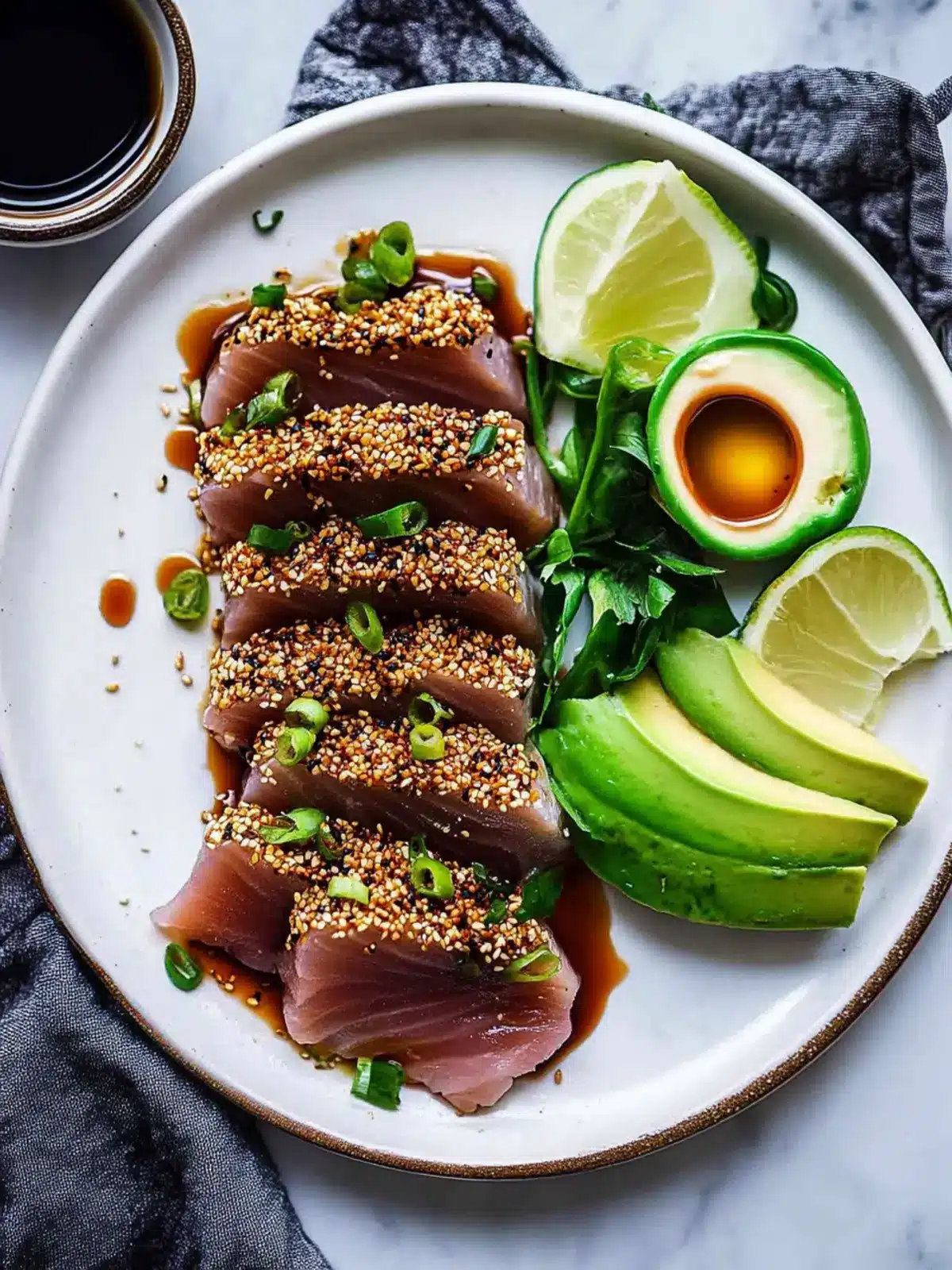
When I first took a bite of Sesame-Crusted Sashimi Tuna, it felt as though I was transported to a seaside restaurant in Japan, the fresh ocean breeze mingling with tantalizing aromas. This dish harmoniously blends the nutty essence of sesame with a glaze of sweet, low-sodium teriyaki, all while allowing the pristine flavor of sashimi-grade tuna to shine through. What s truly magnificent about this recipe is how effortlessly it transforms a simple weeknight dinner into a gourmet culinary experience perfectly seared in just a matter of minutes!
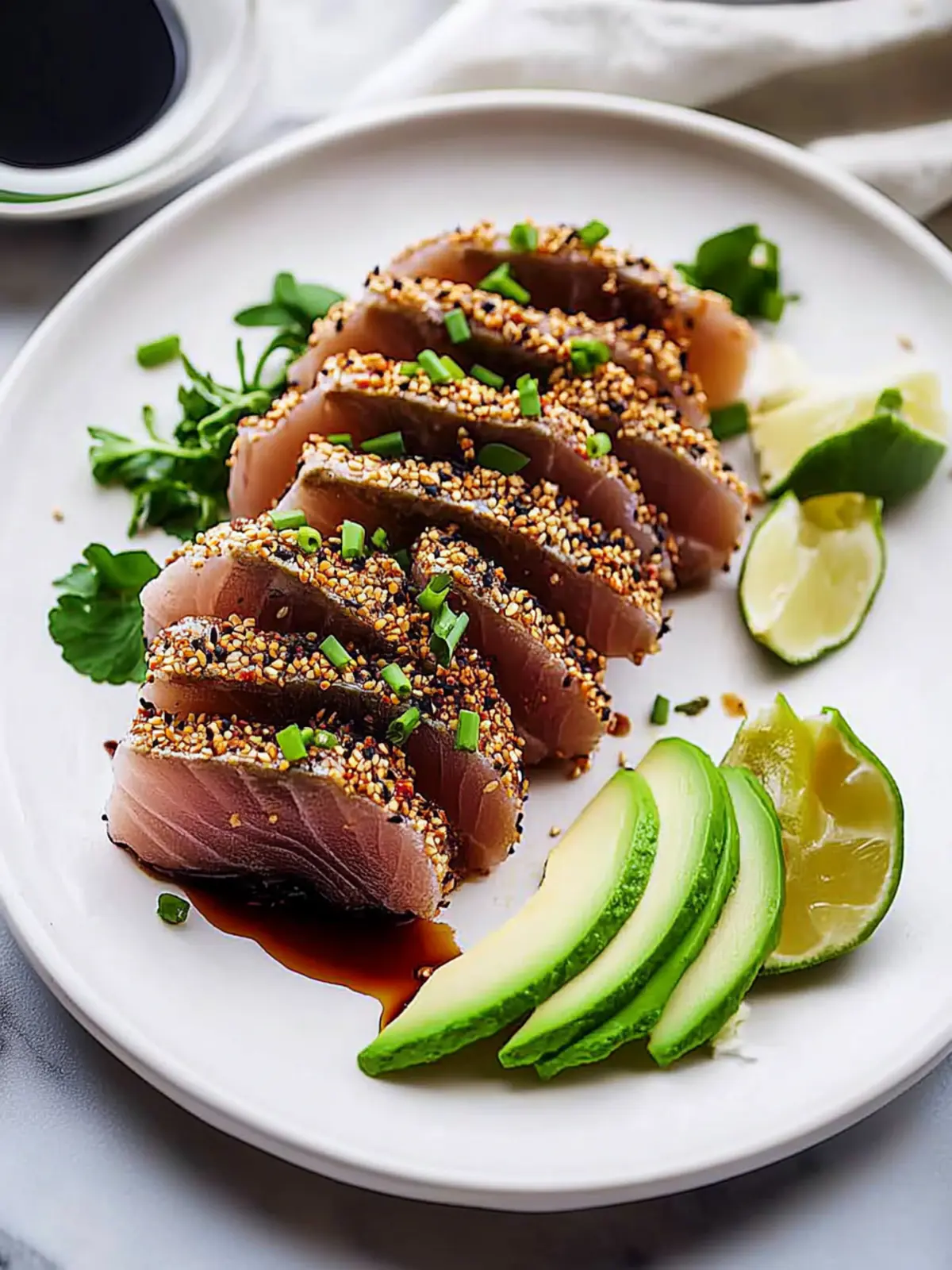
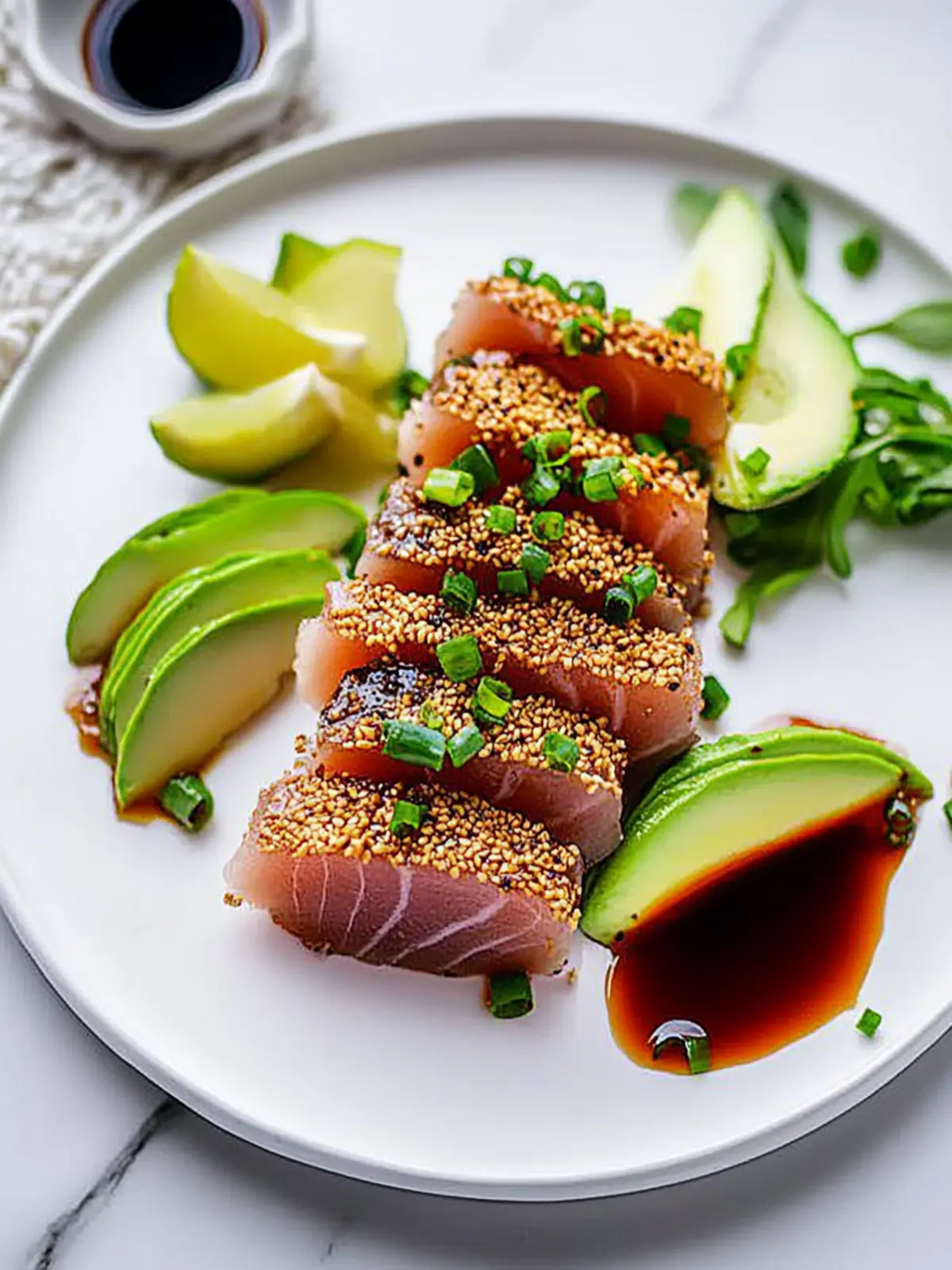
With each bite, you ll experience a satisfying crunch from the golden sesame crust, perfectly complemented by the tender, pink interior of the fish. It s not just quick to whip up but also nutritious and filling, making it the ideal choice for those who want to break free from the chains of fast food without sacrificing flavor. Paired beautifully with sautéed vegetables or a rich salad, this meal is bound to impress not just your palate but anyone lucky enough to share your table. Ready to dive in? Let s get cooking!
Why is Sesame-Crusted Sashimi Tuna a must-try?
Restaurant-Quality Experience: You’ll feel like a gourmet chef with this simple yet stunning dish.
Quick Preparation: Ready in just minutes, perfect for busy weeknights.
Nutritious Delight: Packed with omega-3s and protein, keeping your meals healthy and satisfying.
Unique Flavor Fusion: The combination of nutty sesame and sweet teriyaki elevates each bite.
Versatile Pairings: Serve with salad, rice, or grilled veggies for a complete meal.
Enjoy an elegant dining experience at home without the fuss!
Ingredients for Sesame-Crusted Sashimi Tuna
For the Tuna
Tuna Steaks (2, 1-inch thick, 6-7 ounces each) The star of the dish, ensuring the freshest flavor. Substitute: Fresh salmon or other fish.
White Sesame Seeds (1/3 cup) Provides that irresistible crunch and nutty flavor. Substitute: Just black sesame seeds for a different appearance.
Black Sesame Seeds (1/4 cup) Adds visual interest and an earthy touch. Note: Can be omitted if not available.
For the Marinade
Sesame Oil (2 tsp) Infuses a rich, nutty essence into the steaks. Substitute: Canola or olive oil for a milder taste.
Low-Sodium Teriyaki Sauce (3 Tbsp) Offers a sweet and savory umami kick. Substitute: Soy sauce for a more robust flavor.
Honey (1 Tbsp) Balances savory notes with sweetness. Substitute: Agave syrup or maple syrup for a different sweetness.
Lemon Juice (1 Tbsp) Brightens up the dish with its zesty acidity. Substitute: Lime juice for a fresh twist.
Garlic Powder (1 tsp) Adds savory depth and enhances overall flavor. Substitute: Fresh minced garlic (use slightly less).
Freshly Ground Black Pepper (to taste) Provides a hint of heat, adjust according to preference.
For Cooking
Vegetable Oil (2 Tbsp) Ideal for a perfect sear on the tuna. Substitute: Olive oil for a healthier option.
How to Make Sesame-Crusted Sashimi Tuna
Thaw: Begin by thawing your tuna steaks if they’re frozen. Once defrosted, gently pat them dry with paper towels to prepare for marinating.
Mix Marinade: In a flat dish, combine the sesame oil, low-sodium teriyaki sauce, honey, lemon juice, garlic powder, and black pepper. Stir well until everything is blended beautifully.
Marinate: Place the tuna steaks in the marinade. Let them soak up the flavors at room temperature for about 30 minutes this adds a wonderful depth to your dish!
Coat with Sesame Seeds: After marinating, generously coat the tuna steaks with white and black sesame seeds on all sides. Press gently to ensure they stick well.
Preheat Skillet: Heat up a nonstick skillet over medium-high heat. Waiting for it to get hot will yield the best sear!
Sear the Tuna: Add the vegetable oil to the skillet. Sear the tuna steaks for approximately 2 minutes on each side until they develop a gorgeous, golden-brown crust.
Sear Edges (Optional): If you want a more thorough cooking, you can carefully sear the edges for an additional 15-20 seconds for a lovely texture all around.
Cover for Doneness: For a perfectly cooked interior, cover the skillet for one more minute if you’d like the tuna to be cooked through without overdoing it.
Warm Plate: Transfer the seared tuna to a warm plate. You can sauté some vegetables in the leftover marinade for a fabulous side.
Slice and Serve: Once rested, slice the tuna into thick pieces and serve with sautéed veggies, a crisp salad, or over rice for a delightful meal.
Optional: Garnish with fresh herbs like cilantro or green onions for an extra pop of flavor.
Exact quantities are listed in the recipe card below.
How to Store and Freeze Sesame-Crusted Sashimi Tuna
Fridge: Store any leftover sesame-crusted sashimi tuna in an airtight container in the fridge for up to 1 day. To maintain the best texture, it’s best enjoyed fresh.
Freezer: It’s not recommended to freeze cooked sashimi tuna, as the texture may change and become mushy once thawed. If you must, wrap tightly in plastic wrap and then foil before freezing for up to 1 month.
Reheating: If you have leftover tuna, reheat gently in a skillet over low heat for about 1-2 minutes per side, or until warmed through. Avoid high heat to prevent overcooking the delicate fish.
Wrap Storage: For best results, always wrap leftover tuna tightly to minimize exposure to air, preventing it from drying out or absorbing other odors in your fridge.
Make Ahead Options
These Sesame-Crusted Sashimi Tuna steaks are fantastic for meal prep, saving you valuable time on busy weeknights! You can marinate the tuna steaks up to 24 hours in advance. Simply prepare the marinade and coat the tuna, then store it in an airtight container in the refrigerator. To maintain quality, ensure the tuna is tightly sealed to prevent any absorption of other odors in the fridge. When you’re ready to serve, sear the marinated tuna for about 2 minutes on each side for that perfect crust. With these make-ahead tips, you ll enjoy restaurant-quality sashimi tuna at home, with minimal effort and maximum flavor!
Variations & Substitutions for Sesame-Crusted Sashimi Tuna
Feel free to tailor this recipe to your taste and dietary needs with these delightful variations!
Dairy-Free: Swap any honey with maple syrup or agave syrup to keep it light and still sweet.
Spicy Kick: Add crushed red pepper flakes or Sriracha to the marinade for a fiery twist that excites your palate.
Alternative Protein: Try swapping tuna for fresh salmon, swordfish, or even firm tofu for a unique texture while keeping it vibrant.
Low-Carb Delight: Serve over a bed of cauliflower rice or zucchini noodles to transform this dish into a low-carb masterpiece.
Herbal Infusion: Classic flavors can be enhanced by adding fresh cilantro or basil to the marinade, offering an herby aroma and taste.
Citrus Variation: Experiment with lime juice instead of lemon for a zesty twist that brightens the entire dish in a new way.
Nutty Substitute: If you re short on sesame seeds, try using finely chopped nuts like pistachios or almonds for an interesting crunch.
Sweetened Twist: Incorporate a splash of orange juice into the marinade for a fruity touch that pairs beautifully with the savory notes.
Each of these variations offers a little something special, inviting you to make this dish your own. Enjoy experimenting!
Tips for the Best Sesame-Crusted Sashimi Tuna
Quality Matters: Use high-quality, sushi-grade tuna to ensure safety and flavor. Avoid lower-grade fish, which may not provide the same taste or texture.
Don t Overcook: The key to perfect sashimi tuna is keeping the interior pink and tender. Monitor your cooking time closely 2 minutes per side should suffice.
Hot Skillet: Always start with a hot skillet for the best sear. This helps form that beautiful brown crust quickly without drying out the tuna.
Marination Time: Allow the tuna to marinate for at least 30 minutes for optimal flavor infusion. This simple step is essential for achieving a rich taste in your sesame-crusted sashimi tuna.
Coating Technique: When coating with sesame seeds, press down gently to ensure they adhere well to the tuna, creating a crunchy texture that’s irresistible.
Serving Suggestions: Elevate your plate with a light salad or sautéed vegetables. This not only complements the dish but enhances your dining experience!
What to Serve with Sesame-Crusted Sashimi Tuna?
Elevate your dining experience by pairing this delightful dish with complementary sides that enhance its flavors and textures.
Crispy Asian Slaw: A refreshing crunch with tangy dressing, this slaw adds brightness and vibrant color to your plate. It’s the perfect contrast to the rich tuna.
Steamed Jasmine Rice: Soft and fluffy, jasmine rice soaks up any juices or sauces, creating a comforting and filling base for your flavorful tuna.
Sautéed Garlic Spinach: The earthy flavor and tender texture of garlic-infused spinach pair beautifully, balancing the dish with a nutritious veggie component.
Miso Soup: A warm bowl of miso soup brings a comforting umami flavor, enhancing the overall experience of your meal and connecting with the tuna’s Japanese roots.
Fresh Cucumber Salad: Light and crisp, a cucumber salad adds a refreshing element that cuts through the richness of the sesame crust, keeping your taste buds lively.
White Wine (Sauvignon Blanc): A chilled glass of Sauvignon Blanc complements the dish effortlessly, enhancing the subtle flavors of the tuna without overwhelming it.
Mango Sorbet: For dessert, the sweet, icy texture of mango sorbet rounds off your meal, cleansing the palate while echoing the sweetness of the teriyaki glaze.
Savor each bite as these pairings create a harmonious balance, turning your simple sashimi tuna into an extraordinary dining experience!
Sesame-Crusted Sashimi Tuna Recipe FAQs
How do I select the perfect tuna steaks for sashimi?
Absolutely! When selecting sashimi-grade tuna, look for bright, vibrant color without any dark spots or discoloration. The flesh should be firm to the touch and have a fresh ocean scent. A deep red or pink tint usually indicates freshness, while a dull appearance suggests it might not be at its best.
How should I store leftover sesame-crusted sashimi tuna?
Very important! Store any leftover sesame-crusted sashimi tuna in an airtight container in the fridge. It s best enjoyed fresh, but if you must store it, consume it within 1 day to maintain optimal texture and flavor. For the best results, I recommend reheating it gently in a skillet over low heat for about 1-2 minutes per side.
Can I freeze cooked sashimi tuna?
While not ideal, if you wish to freeze cooked sesame-crusted sashimi tuna, wrap it tightly in plastic wrap, then add an extra layer of aluminum foil to protect it from freezer burn. Store it for up to 1 month. However, be aware that the texture may change once thawed, potentially becoming mushy. When you’re ready to use it, thaw in the fridge overnight and gently reheat in a skillet.
What can I do if there s too much seasoning in my marinade?
If you find your marinade to be overly salty or strong, there s an easy fix! You can dilute the marinade by adding a bit more sesame oil or honey to balance out the flavors. Keep in mind balance is key! Whisk these additions into your existing marinade until the desired taste is reached. Another option is to marinate for a shorter period next time 15 minutes instead of 30 may help reduce seasoning intensity.
Is sesame-crusted sashimi tuna safe for my pet cat?
Caution is advised! While fish is generally safe for cats, it s essential to avoid any seasoning, especially salty or sweet ones. If your sesame-crusted tuna has been cooked with teriyaki sauce and other spices, it s best not to share it with your furry friend. Plain, cooked tuna without any additives can be a healthy treat in moderation.
What are some good substitutes for the sesame seeds?
Very versatile! If you’re out of sesame seeds, you can replace them with crushed nuts like almonds or pistachios for an interesting crunch and flavor. Alternatively, try using breadcrumbs for a different texture, or simply opt for a mix of seeds you have on hand, such as pumpkin or sunflower seeds, for a delightful twist in flavor and appearance.