
Revitalize Your Spring with This Creamy Pea Fish Chowder
Last Updated on May 8, 2026 by aitanarecipez
As the first signs of spring peek through the last remnants of winter, I find myself craving lighter meals that celebrate the season’s vibrant flavors. You know that blissful moment when you uncover a recipe that feels like a breath of fresh air? That s how I felt when I stumbled upon this delightful Spring Pea Halibut Chowder. It s no ordinary chowder; this dish is a wonderful twist on a classic, featuring the tender, meaty halibut that melds beautifully with sweet peas and delicate pea shoots.
The rich, creamy broth is elevated with a bright hint of lemon zest, making each spoonful a refreshing reminder of spring s arrival. I often enjoy this chowder on laid-back afternoons or when I m entertaining friends, as it’s not just nourishing but also impressively simple to whip up. Whether you re tired of everyday meals or just keen to bring some seasonal joy to your table, this chowder is the perfect pick to add to your repertoire. Grab your apron, and let s get cooking!
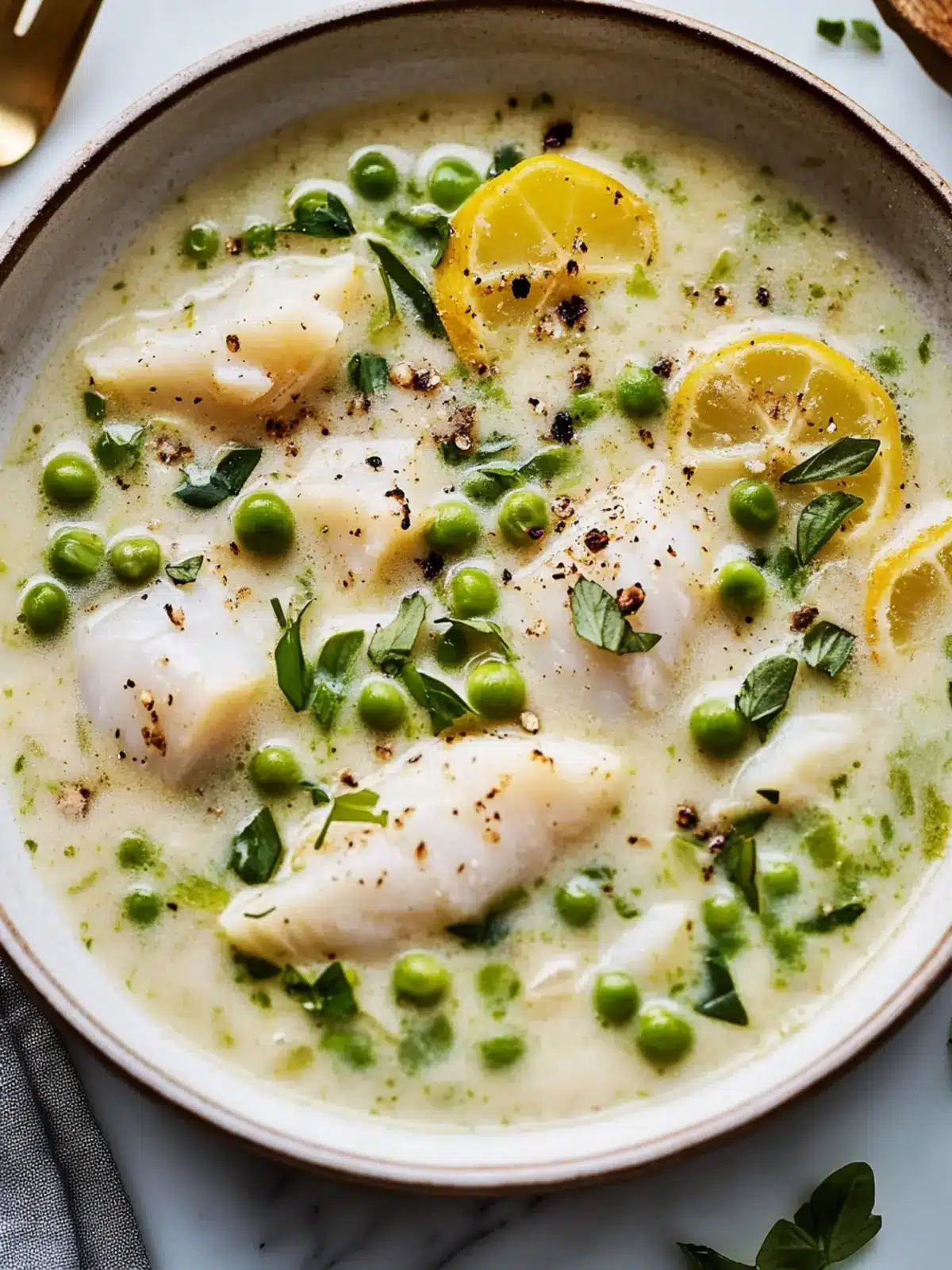
Why is Spring Pea Fish Chowder a Must-Try?
Fresh, Vibrant Flavors: This chowder encapsulates spring with every spoonful, featuring tender sweet peas that burst with flavor.
Creamy Comfort: Heavy cream enhances the chowder s richness, making it both cozy and indulgent.
Unique Twist: By using halibut instead of the traditional cod, you get a delightful twist in texture and taste, perfect for seafood lovers.
Quick and Easy: With only a handful of ingredients and simple steps, you can have this impressive dish ready in no time.
Perfect for Entertaining: Serve it at your next gathering, and watch your guests delight in its refreshing and satisfying qualities.
Spring Pea Fish Chowder Ingredients
For the Chowder
- Sweet Peas Provide natural sweetness and vibrant color; fresh or frozen works well.
- Halibut A meaty alternative to cod that enhances the chowder s richness; ensure it’s fresh for best results.
- Heavy Cream Gives the chowder its luxurious, creamy consistency; swap with half-and-half for a lighter version.
- Vegetable Broth Acts as the chowder base, adding depth; chicken broth can be used for a heartier flavor.
- Onion Builds a flavorful foundation for the dish; shallots can substitute for a milder touch.
- Garlic Infuses the chowder with warmth and aromatic richness; finely minced for best results.
For the Freshness
- Pea Shoots Add a delicate crunch and subtle sweetness; can be replaced with young spinach if necessary.
- Lemon Zest Brightens the chowder and enhances the flavors beautifully; fresh lemon juice can add extra zing.
This Spring Pea Fish Chowder is a delightful blend of fresh ingredients, making it a dish that celebrates the best of the season!
How to Make Spring Pea Fish Chowder
Sauté Aromatics: In a large pot, heat some olive oil over medium heat and add chopped onions and minced garlic. Cook until translucent and fragrant, about 3-5 minutes.
Simmer Broth: Pour in the vegetable broth, stirring gently. Bring it to a simmer, allowing the flavors to meld beautifully.
Add Peas: Stir in the sweet peas and let them cook until just tender, about 3-4 minutes. Watch for their vibrant green color!
Incorporate Cream and Halibut: Reduce the heat and gently mix in the heavy cream. Add halibut cubes and let them simmer until opaque, around 5-7 minutes.
Fold in Fresh Ingredients: Carefully fold in the pea shoots and lemon zest, infusing the chowder with freshness. Season to taste with salt and pepper.
Serve and Enjoy: Serve the chowder hot, garnishing with extra lemon zest for a pop of brightness if desired.
Optional: Sprinkle freshly chopped herbs on top for added color and flavor.
Exact quantities are listed in the recipe card below.
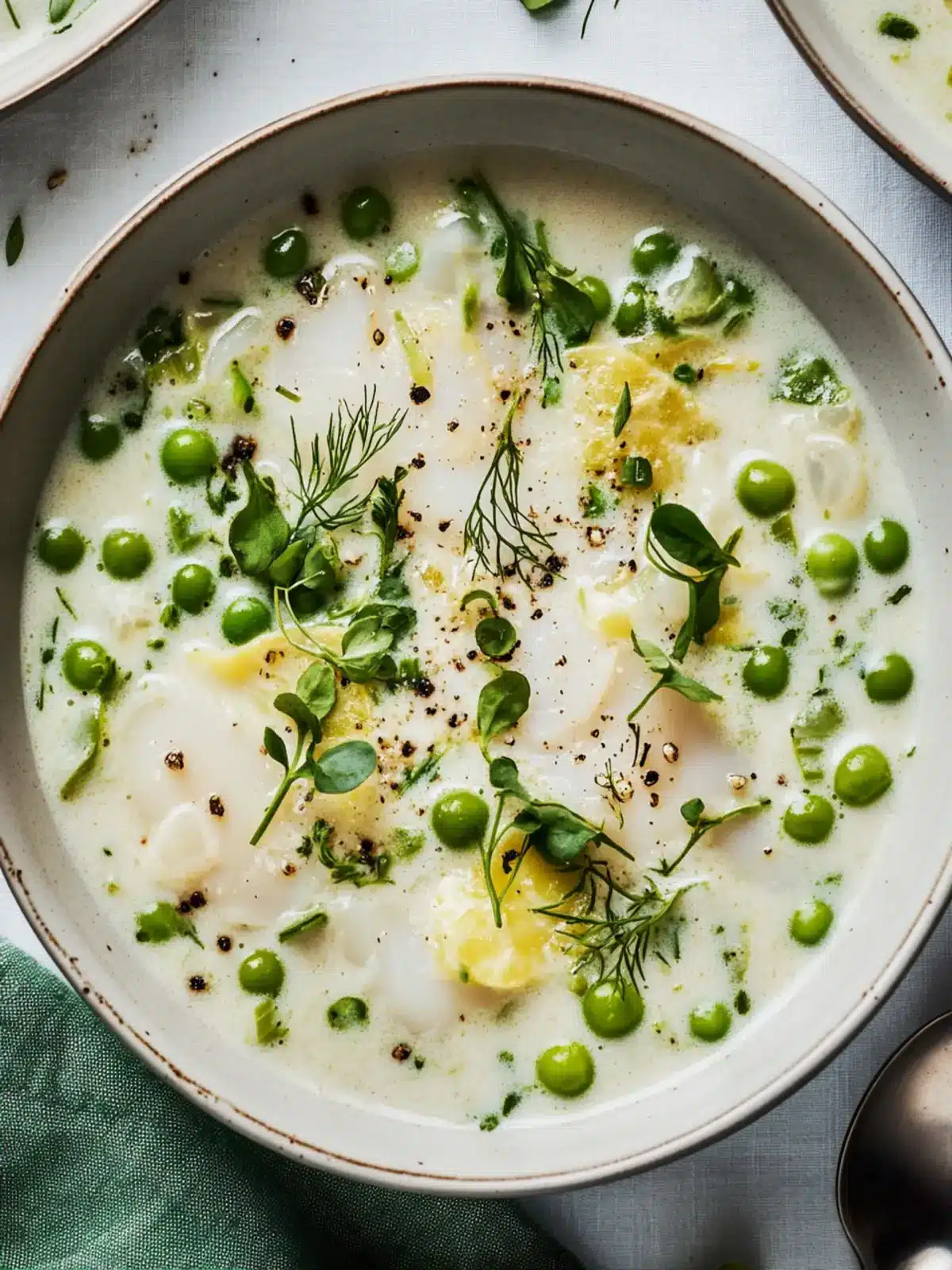
Storage Tips for Spring Pea Fish Chowder
Fridge: Store leftovers in an airtight container for up to 3 days, keeping the chowder fresh and ready to enjoy.
Freezer: If you’d like to freeze, portion the chowder into freezer-safe containers. It can be frozen for up to 2 months, though fresh textures may slightly change.
Reheating: To reheat, thaw overnight in the fridge, then gently warm on the stove over low heat. Add a splash of vegetable broth or cream to restore creaminess if needed.
Make-Ahead: Prepare the chowder a day in advance for improved flavors; just remember to add fresh pea shoots and lemon zest before serving for the best taste experience!
Variations & Substitutions for Spring Pea Fish Chowder
Feel free to play around with this delightful chowder, adding a personal twist that pleases your palate.
- Other Fish: Swap halibut with salmon or trout for a flavor boost and a new texture. Each delivers a unique personality to the chowder!
- Vegan Delight: Replace halibut with chickpeas or tofu, and use coconut milk for creaminess without dairy. It s a satisfying alternative!
- Lemon Zing: Amp up the citrus by adding a splash of lime juice alongside the lemon zest for a bright twist. A refreshing kick!
- Herb Garden: Toss in fresh herbs like dill, tarragon, or parsley to elevate the flavors. Each herb brings its own unique fragrance to the chowder.
- Spicy Kick: For a touch of heat, sprinkle in some red pepper flakes or diced jalapeños while cooking. Just a pinch can create delightful warmth!
- Creamy Veggie Option: Use full-fat coconut cream to create a rich, dairy-free chowder that retains a smooth texture and taste.
- Extra Color: Fold in diced carrots or thinly sliced asparagus for added nutrition, texture, and beautiful color throughout the chowder.
- Grain Boost: Serve the chowder over quinoa or rice for a more substantial meal. It s a wholesome twist that adds extra nourishment!
Expert Tips for Spring Pea Fish Chowder
Choose Fresh Halibut: Ensure you select fresh halibut for the best texture and flavor. The fish should smell like the ocean not fishy!
Cook Peas Perfectly: To retain their vibrant color and crunch, avoid overcooking the sweet peas. They should be tender yet still bright!
Season Gradually: Taste as you go! Start with a pinch of salt and adjust the seasoning in your Spring Pea Fish Chowder gradually for the perfect balance.
Avoid Sogginess: If making ahead, store the chowder without pea shoots and lemon zest. Add these just before serving to maintain their freshness.
Garnish for Flair: Don t skip a sprinkle of fresh herbs or an extra zest of lemon before serving; it elevates the dish and adds a lovely pop!
What to Serve with Spring Pea Fish Chowder?
Creating a well-rounded meal around this chowder will delight your senses and satisfy your guests.
- Crusty Bread: Perfect for dipping, warm, crusty bread adds a satisfying texture while soaking up the creamy chowder.
- Fresh Green Salad: A light, refreshing salad with mixed greens and a citrus vinaigrette balances the richness of the chowder perfectly.
- Roasted Asparagus: The earthy notes of roasted asparagus contrast nicely with the sweet peas, making them a delightful side.
- Herbed Rice: Fluffy rice infused with herbs brings a lightness to the table, enhancing the seafood without overpowering it.
- Lemon Sorbet: To cleanse the palate, serve a scoop of lemon sorbet between courses; it s a refreshing end after the chowder.
Finally, consider pairing this dish with a crisp white wine like Sauvignon Blanc. It complements the seafood beautifully and adds a touch of elegance!
Make Ahead Options
These Spring Pea Fish Chowder preparations are perfect for busy home cooks looking to save time during the week! You can chop the onions and garlic, as well as measure out the sweet peas and halibut, up to 24 hours in advance, storing them in airtight containers in the refrigerator to keep their freshness. Additionally, you can pre-mix the heavy cream and vegetable broth in a separate container. When it’s time to enjoy your chowder, simply sauté the aromatics, stir in the prepared broth, add the peas and halibut, and let them simmer until perfectly cooked. This way, you ll have a comforting, restaurant-quality Spring Pea Fish Chowder ready to serve with minimal effort!
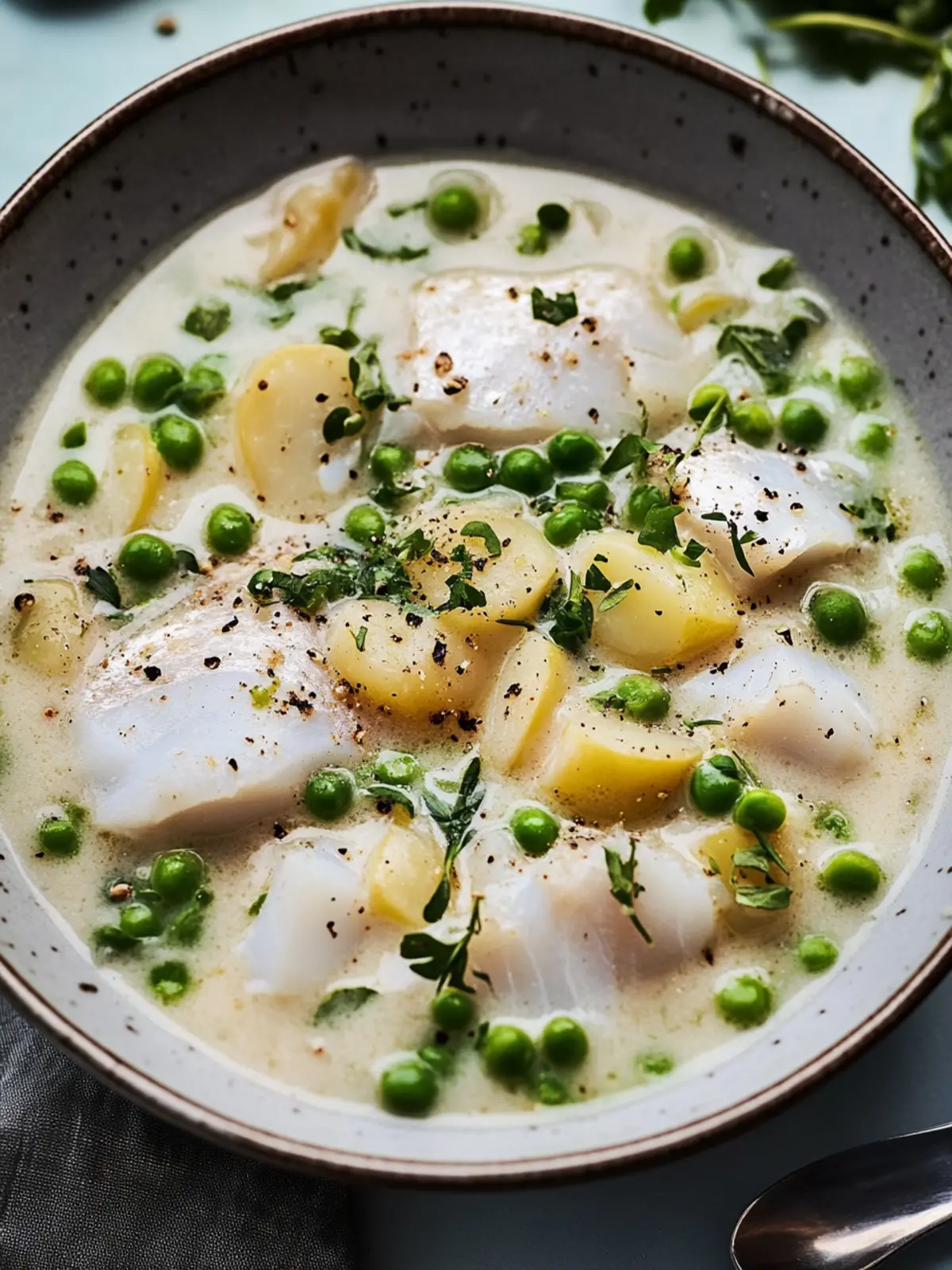
Spring Pea Fish Chowder Recipe FAQs
What kind of sweet peas should I use?
Absolutely! Fresh sweet peas are ideal for this chowder as they provide a vibrant color and natural sweetness. However, frozen sweet peas work wonderfully too and can be just as sweet and tender if fresh peas aren’t available. Look for peas that are bright green and firm for the best results.
How should I store leftover chowder?
Very! To keep your Spring Pea Fish Chowder fresh, transfer leftovers into an airtight container. It can be stored in the refrigerator for up to 3 days. If you find yourself with more than you can eat, freezing is a great option! Be sure to cool it completely before placing it into freezer-safe containers.
Can I freeze this chowder?
Of course! To freeze your chowder, let it cool entirely, then portion it into freezer-safe containers. It will maintain its quality for up to 2 months. When you’re ready to enjoy it again, thaw it overnight in the fridge. Gently reheat on the stove over low heat, adding a splash of vegetable broth or cream if it appears too thick.
What if the halibut is overcooked?
Oh dear! Overcooked halibut can become dry and tough. Try to avoid this by cooking the fish just until opaque (about 5-7 minutes), checking it often. If you’ve got a batch of chowder with dry fish, consider adding a little more heavy cream or vegetable broth to restore some moisture and improve the texture.
Are there any dietary considerations for this chowder?
Absolutely! If you’re catering to dietary restrictions, this Spring Pea Fish Chowder can easily be modified. For a gluten-free version, ensure your vegetable broth is certified gluten-free. If you’re making it dairy-free, swap out heavy cream for coconut milk or a dairy-free cream alternative, and use chickpeas or tofu instead of halibut for a vegan option. Always double-check for allergies related to seafood as well.
How can I elevate the flavor of the chowder?
Certainly! To enhance the taste of your chowder, consider adding fresh herbs like dill or tarragon during cooking. These herbs not only provide a burst of flavor but also a beautiful aroma. You can also experiment with a splash of white wine during the simmering stage for a nuanced depth. Tasting and adjusting the seasoning as you go is always encouraged go for that perfect balance!